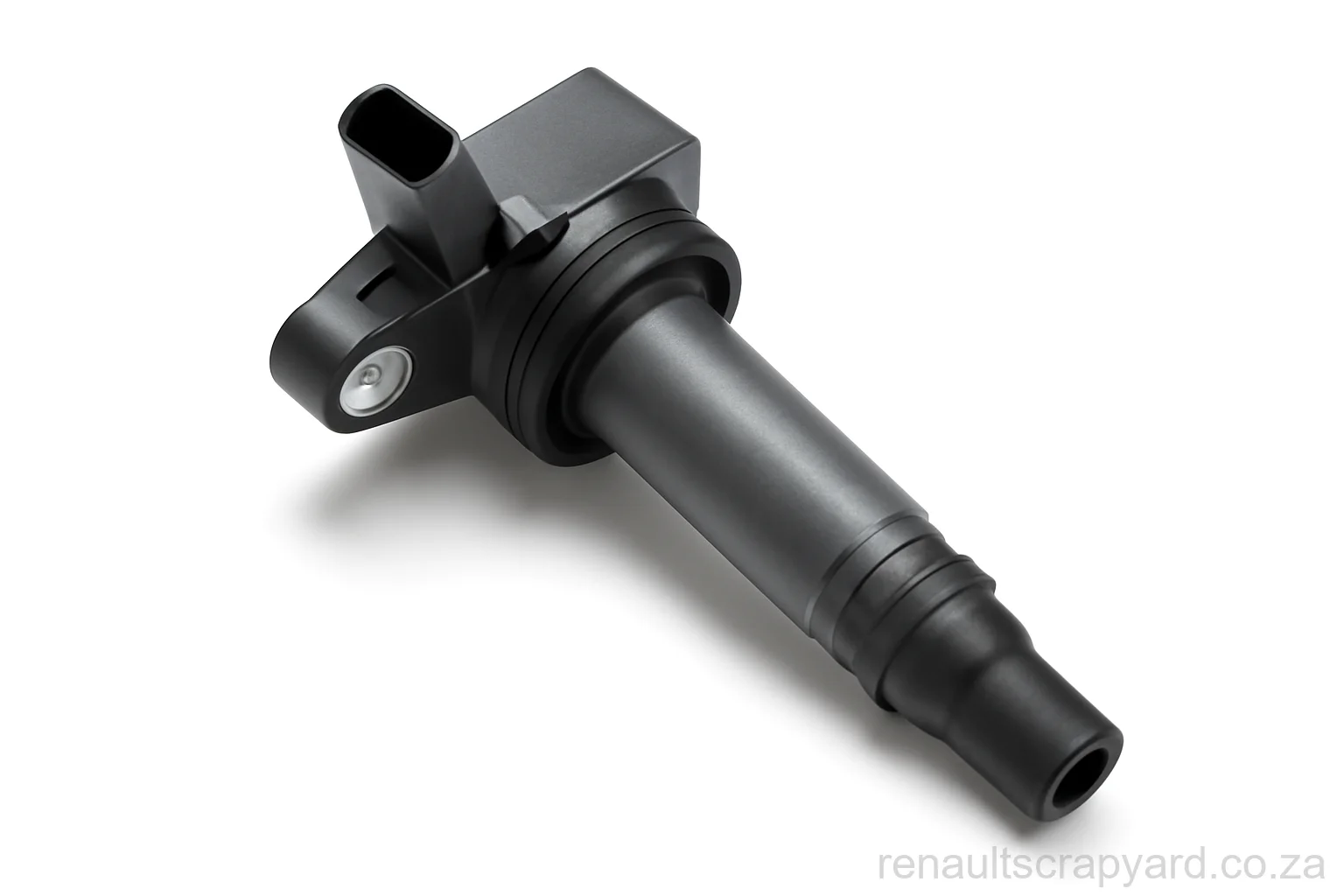
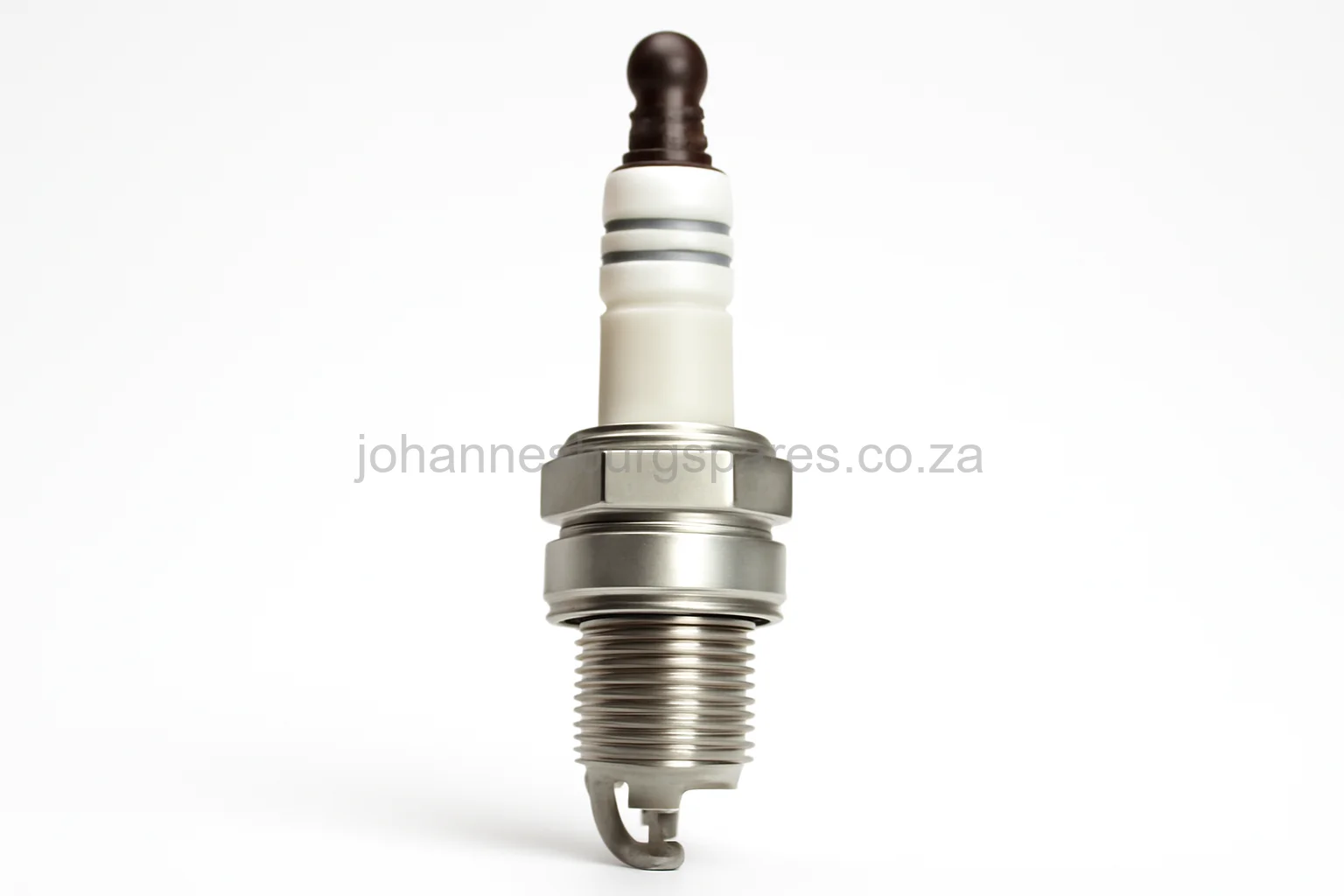
Toyota coil-on-plug ignition coils use a 4-wire connector carrying battery power (+B), an ECM trigger signal (IGT), a feedback signal (IGF), and ground (GND). A damaged connector causes misfires and OBD codes P0351–P0356 — and can often be fixed with a replacement pigtail rather than a new coil.
Key Takeaways
Most petrol Toyotas built since the early 2000s — from the Corolla and Camry to the Hilux and Fortuner — use a coil-on-plug (COP) ignition system where each cylinder has its own individual ignition coil sitting directly on the spark plug. That coil plugs into a small 4-wire connector, and understanding what those four wires do is essential for diagnosing misfires, reading fault codes correctly, and replacing a damaged connector without causing ECM damage.
The short answer: the four wires carry battery power (+B), an ignition trigger signal (IGT), an ignition feedback signal (IGF), and earth (GND). A fault in any one of them will trigger a misfire and log an OBD code — usually P0351 through P0356 depending on the cylinder affected.
Key Takeaways
Wire / Pin
Label
Function
Shared or Per-Coil?
Pin 1
+B
12 V ignition power from INJ fuse
Shared (one feed to all coils)
Pin 2
IGT
ECM trigger signal to fire the coil
Individual (IGT1, IGT2…)
Pin 3
IGF
Ignition feedback — confirms coil fired
Shared return to ECM
Pin 4
GND
Earth / ground for the coil circuit
Per coil to chassis earth
OBD codes
P0351–P0354 (4-cyl), P0356 (V6)
Ignition coil primary/secondary circuit fault
One code per cylinder
Connector repair
Replacement pigtail or connector shell
Usually far cheaper than a new coil
Ask an auto electrician for a quote
Why Toyota Uses 4 Wires (and Not 2 or 3)
Older Toyota models — think 3E, 5A-FE and the earlier 7A-FE engines — used a distributor with a single ignition coil and simple two-wire circuits. When Toyota moved to individual coil-on-plug ignition, they added something most other manufacturers don't bother with: a closed-loop feedback circuit.
Most manufacturers trigger a coil and assume it fired. Toyota goes further. The ECM sends out a shared reference voltage on the IGF wire; when a coil's igniter module fires, it pulls that signal towards earth momentarily. The ECM reads that pull-down as confirmation the coil actually fired. If the coil fires but IGF doesn't respond — or if the coil never fires at all — the ECM flags the fault and sets a P035x code.
This closed-loop approach means Toyota's 4-wire system gives you three distinct diagnostic signals instead of one, making it easier to pinpoint exactly which cylinder failed and why.
Which Toyotas have the 4-wire COP connector? Most Toyota petrol models sold in SA since approximately 2000 that use individual coil-on-plug ignition — including the Corolla (1ZZ-FE, 2ZZ-GE, 2ZR-FE), Camry (2AZ-FE), RAV4, Fortuner, Hilux (petrol), Prado and Land Cruiser (1GR-FE, 2TR-FE). Older distributor-equipped engines do not use this connector. The 3RZ-FE 2.7 litre Hilux had three distinct ignition generations from 1995–2004 and does not use this 4-pin COP connector in any of them.
The 4-Wire COP Connector — Pin-by-Pin Breakdown
Pin 1 — +B (Battery Power)
This is the 12-volt supply that powers the ignition primary circuit inside the coil. It comes from the INJ fuse via the ignition switch — meaning it is only live when the key is in the ON or START position. Critically, this wire is shared between all coils: a single wire branches off to each coil connector. A break in this feed will kill all coils simultaneously, which usually causes a no-start rather than a single-cylinder misfire.
Pin 2 — IGT (Ignition Timing Trigger)
This is the signal wire the ECM uses to fire the coil. Each cylinder has its own dedicated IGT line — IGT1 for cylinder 1, IGT2 for cylinder 2, and so on. The ECM calculates ignition timing based on engine speed, load, temperature and dozens of other inputs, then pulses this wire at exactly the right moment. Because it is individual per coil, a fault on the IGT wire for one cylinder causes a single-cylinder misfire only — the other coils keep firing normally.
Pin 3 — IGF (Ignition Feedback)
This is the feature that makes Toyota's 4-wire system unique. The ECM applies a low reference voltage to the IGF wire, which is shared (spliced) across all coil connectors. When a coil fires, the igniter module inside the coil momentarily pulls the IGF signal towards earth. The ECM monitors this pull-down event to confirm each coil fired when commanded. If the coil received the IGT trigger but IGF does not respond, the ECM knows the coil failed to fire — even if the coil itself is physically present and connected.
Diagnostic tip: The IGF circuit is shared across all coils. This means if the IGF wire is broken or shorted, the ECM may log multiple misfire codes across all cylinders — even if the coils themselves are fine. Always check the IGF wiring at the splice point before condemning individual coils.
Pin 4 — GND (Ground / Earth)
Each coil has its own dedicated earth wire running from the connector back to a chassis earth point. A loose or corroded earth connection is one of the most common causes of intermittent misfires that are difficult to reproduce — the coil has power and gets the IGT trigger, but cannot complete the circuit to fire. Always check earth connections when chasing ghost misfires.
Toyota Ignition Coil & Connector
New & quality used stock from our Johannesburg & Cape Town branches — delivered nationwide.
Wire Colour Codes — Do They Matter?
Toyota does use colour-coded wiring, but the colours vary significantly between models, engine codes and model years. There is no single universal colour assignment for the four pins that applies to all Toyotas. Workshop forums show different colour sets for the Camry 2AZ-FE, the Corolla 1ZZ-FE, the Sienna 2GR-FE and the RAV4 2AZ-FE — even among vehicles of the same model family built in different years.
What stays constant is the pin function, not the colour. When identifying wires without a factory service manual, use a multimeter:
What to measure
Expected reading
Pin it identifies
Voltage with ignition ON, coil unplugged
~12 V to chassis earth
+B (power)
Continuity to chassis earth, ignition OFF
0 Ω (direct earth)
GND (ground)
Voltage with ignition ON, coil unplugged
~5 V to chassis earth
IGF (feedback reference)
Oscilloscope or lab scope, cranking
Pulsing signal ~5 V peak
IGT (trigger from ECM)
Never apply 12 V to the IGT or IGF signal wires. These are ECM signal circuits operating at logic-level voltages (approximately 5 V). Applying battery voltage directly to a signal pin will damage or destroy the ECM output driver. If you are splicing or repairing wires, confirm pin identity with a multimeter before applying any voltage.
OBD Codes Related to Ignition Coil Wiring Faults
When the ECM detects a problem in the ignition coil primary or secondary circuit — including wiring and connector faults — it logs a P035x code. Here is what each code means for Toyota:
DTC Code
Circuit
Affected Cylinder
Common SA Toyota Models
P0350
Ignition coil primary/secondary circuit (generic)
Any / unspecified
All
P0351
Ignition coil A circuit
Cylinder 1
Corolla, Camry, Hilux petrol, RAV4
P0352
Ignition coil B circuit
Cylinder 2
Corolla, Camry, Hilux petrol, RAV4
P0353
Ignition coil C circuit
Cylinder 3
Corolla, Camry, Hilux petrol, RAV4
P0354
Ignition coil D circuit
Cylinder 4
Corolla, Camry, Hilux petrol, RAV4
P0355
Ignition coil E circuit
Cylinder 5
V6 models (Fortuner, Land Cruiser Prado)
P0356
Ignition coil F circuit
Cylinder 6
V6 models (Fortuner, Land Cruiser Prado)
These codes do not automatically mean the coil itself is faulty. The fault could be in the connector, the wiring harness, the igniter module inside the coil, or — less commonly — in the ECM output driver. A thorough diagnosis checks the connector and wiring first before replacing an expensive coil. See our multimeter testing guide for Toyota ignition coils for a step-by-step approach.
Common Connector Problems in South African Conditions
South Africa's heat — particularly under-bonnet temperatures in summer — is hard on plastic connector bodies and wire insulation. The three most common connector failures on Toyota COP systems in SA are:
1. Broken Locking Tabs
The 4-pin connector snaps onto the coil body using a plastic locking tab. This tab is brittle and snaps easily, especially on older vehicles where the plastic has heat-cycled many thousands of times. A connector with a broken tab will still make electrical contact most of the time, but can vibrate loose and cause intermittent misfires — the kind that are worst on rough SA roads.
The correct technique to release the connector is to use a small flat-blade screwdriver to lift the locking tab gently upward rather than squeezing the button on the side. Professionals at Technician.Academy recommend this method specifically because it prevents the tab from snapping off during service.
2. Melted or Heat-Damaged Insulation
When a coil fails internally — particularly if it overheats before finally dying — it can generate excess heat at the connector, melting the wire insulation and sometimes fusing the connector body to the coil. This type of damage requires replacing both the coil and the connector pigtail.
3. Corroded or Pushed-Back Terminals
Moisture ingress (especially on bakkies used on farm tracks or washed with high-pressure hoses) causes terminal corrosion inside the connector body. Corroded pins increase resistance and cause voltage drop on the IGT and IGF signal circuits — resulting in misfires that are more pronounced under load. Terminals can also be pushed backward out of the connector body during ham-fisted disconnection attempts.
SA Connector Replacement Costs (2026)
Replacement 4-pin Toyota COP connector pigtails are sold by auto electricians and wiring suppliers — ask for a price for your engine. OE Toyota connector shells can be ordered through Toyota dealerships. Where the coil and connector must be replaced together, coils are listed on our ignition coils page at about R265–R650 aftermarket or R700–R900 genuine Denso per coil. Replacing one connector is a short job for an auto electrician.
Toyota Ignition System Parts
New & quality used stock from our Johannesburg & Cape Town branches — delivered nationwide.
Replacing a Damaged Connector — Step-by-Step Overview
If you have a damaged connector body (broken tab or melted plastic) but the wires are intact, replacing just the connector shell is the most cost-effective fix:
Disconnect the battery — always work on ignition circuits with the battery disconnected to prevent ECM damage.
Identify the faulty connector — match it to the cylinder number from your OBD code (P0351 = cylinder 1, etc.).
Remove the wires from the old shell — most connector bodies use a plastic retaining tab on each terminal; depress it with a small pick and slide the terminal out from the rear. Do not cut wires if the terminals and pins are still in good condition.
Transfer the terminals into the new shell — push each terminal in from the rear until it clicks. If the terminals are corroded or damaged, crimp-and-solder new terminals and use heat-shrink tubing.
Reconnect and test — reconnect the battery, clear the OBD codes with a scan tool, and test drive for at least 20 km to confirm the misfire is resolved and no codes return.
Need a replacement coil, connector, or wiring pigtail for your Toyota? Browse Toyota ignition coils or get a quote below.
What does IGT stand for on a Toyota ignition coil connector?
IGT stands for Ignition Timing. It is the trigger signal wire from the ECM to the coil's igniter module. Each cylinder has its own IGT wire (IGT1, IGT2, etc.), allowing the ECM to fire each coil independently at the precise moment calculated for optimal combustion. A fault on this wire causes a single-cylinder misfire.
What does IGF stand for?
IGF stands for Ignition Feedback. It is Toyota's unique closed-loop confirmation circuit. The ECM applies a reference voltage to the IGF wire; when a coil fires, its igniter module pulls the IGF signal momentarily to earth, confirming successful ignition. If the ECM sends an IGT trigger but receives no IGF response, it logs a P035x fault code.
Can I drive with a damaged ignition coil connector?
You can physically drive the vehicle, but a damaged or loose connector typically causes a cylinder misfire, which means unburnt fuel passes into the exhaust. This can quickly damage the catalytic converter — an expensive repair. Fix a connector fault promptly. For more detail on the risks, see our post on bad ignition coil symptoms every Toyota owner should know.
Will a broken locking tab cause a misfire?
Not immediately — a connector with a broken tab usually still makes electrical contact. However, on South African roads the vibration will eventually cause the connector to rock loose, creating an intermittent contact fault. This is one of the hardest misfires to diagnose because it may only appear on bumpy roads or under hard acceleration. Replace the connector shell as soon as you notice the tab is broken.
Can I fit any 4-pin connector to a Toyota coil, or does it have to be specific?
The connector body must match the physical size and pin spacing of the coil — and Toyota uses two different connector sizes (sometimes referred to as large and small) across different engine families. Confirm the correct size before ordering. Your Toyota model and engine code (e.g. 1ZZ-FE, 2AZ-FE, 2GR-FE) will determine which connector body fits. A parts supplier or auto electrician can help identify the correct unit from your engine code.
What OBD code does a wiring fault on the ignition coil trigger?
The ECM will log a P035x code — P0350 for a general circuit fault, or P0351 through P0356 for cylinder-specific faults (A=1, B=2… F=6). These codes mean the ECM detected an open or short circuit in the ignition coil primary/secondary circuit. A wiring or connector fault will trigger the same codes as a failed coil, which is why wiring must be ruled out first before replacing the coil itself.
Related Video
Video: Toyota 4 Wire Ignition Coil Wiring Diagram — How To Test Toyota 4 Wire Ignition Coils And Working
This article is for informational and educational purposes only, based on automotive industry research and publicly available data. Used Toyota Parts SA is a parts supplier, not a licensed automotive repair facility. We do not provide mechanical advice or diagnostics.
Always consult a qualified mechanic or Toyota-certified technician before performing repairs. Incorrect installation of parts can lead to vehicle damage, safety hazards, or injury. Prices, specifications, and availability mentioned are approximate and subject to change.
We assume no liability for actions taken based on this content. Contact us for current parts availability and pricing.
Need Toyota Parts?
Get a free quote from our suppliers. New aftermarket and quality used parts for all 37 Toyota models, delivered nationwide.