Try searching for something else or browse our categories.
Ignition & ElectricalBuyer's GuidesMaintenance
How Long Do Ignition Coils Last & When to Replace Them (Toyota Guide)
How long do Toyota ignition coils last? There's no fixed interval — learn what shortens their life, the signs they're failing, when to replace them and what it costs in South Africa.
Craig Sandeman
Automotive industry researcher and content specialist at Used Toyota Parts SA.
Toyota ignition coils have no fixed replacement interval — how long they last depends on heat, spark plug condition and oil leaks. Replace them when misfires, rough idle, or a check engine light appears — or proactively at your spark plug service interval.
Key Takeaways
There is no fixed lifespan for a Toyota ignition coil — heat, oil leaks, and neglected spark plugs decide how long one lasts, and can cut its life dramatically. There is no fixed replacement interval in Toyota's service schedule; coils are replaced when they show symptoms or when preventive maintenance makes sense.
This guide explains exactly how long you can expect Toyota coils to last, what kills them early, and the smartest time to replace them — whether you drive a Corolla to work daily or put hard kilometres on a Hilux.
Key Takeaways
Factor
Detail
Typical lifespan
No fixed figure — depends on heat, plug condition and oil leaks
No fixed service interval
Toyota does not schedule coil replacement — replace on symptoms or at spark plug service
At spark plug replacement (interval per your service book)
Coils per 4-cylinder Toyota
4 coils (one per cylinder on coil-on-plug engines from ~2005+)
SA coil cost range
R265–R900 per coil (aftermarket to genuine Denso)
How Long Do Toyota Ignition Coils Actually Last?
No single lifespan applies to every coil, and Toyota does not set one. Toyota's own OEM coils are made by Denso; aftermarket coils vary in quality, so some last a long time and some fail early.
What decides it in real-world SA driving is how the coil is treated — spark plug condition, heat and oil leaks matter far more than the calendar.
The most important factor for coil longevity isn't the coil itself — it's the state of your spark plugs. A worn spark plug forces the coil to work harder, generating higher voltages with each firing event. Over thousands of cycles, that extra stress accelerates insulation breakdown inside the coil.
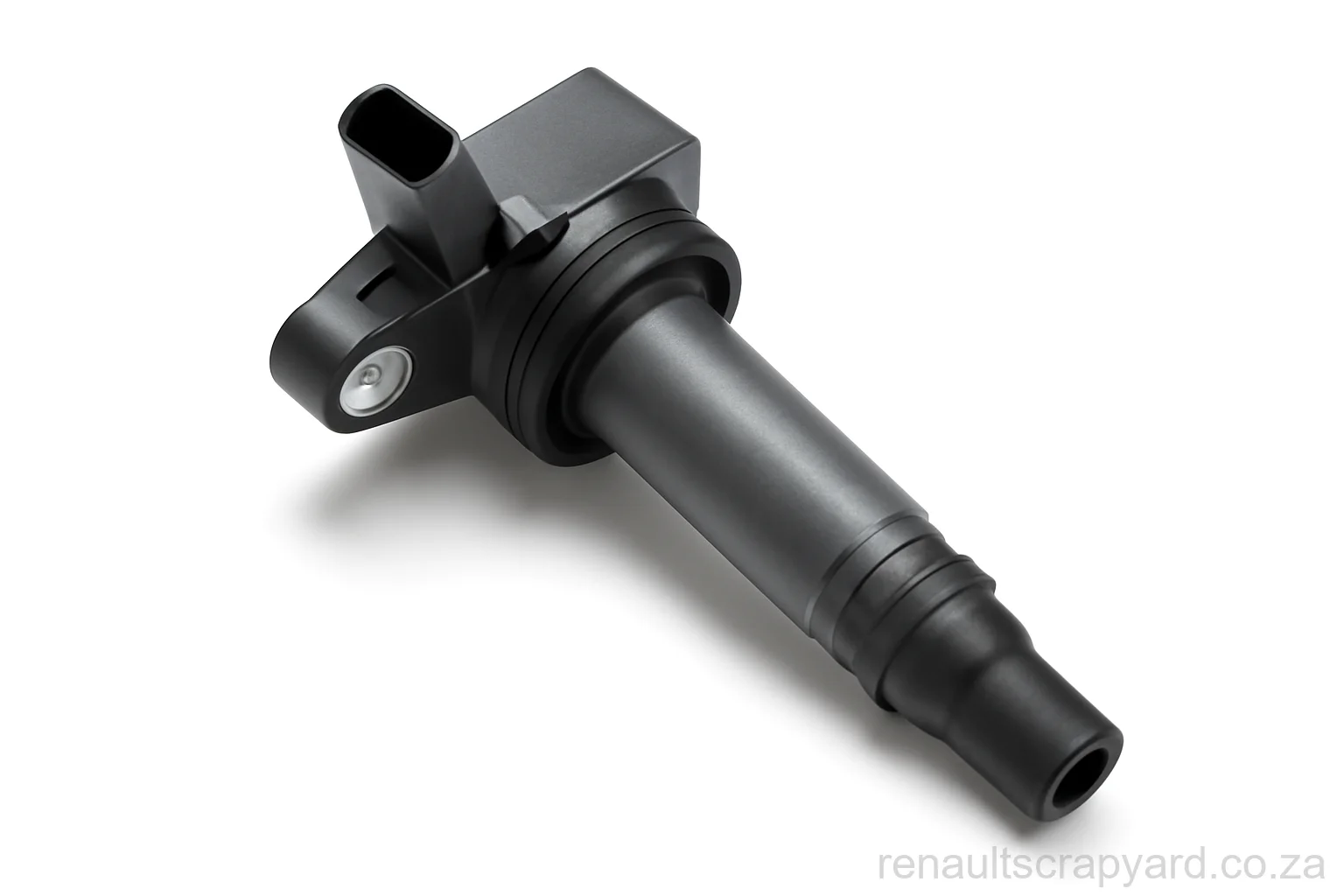
Toyota Ignition Coils
New & quality used stock from our Johannesburg & Cape Town branches — delivered nationwide.
What Kills Ignition Coils Early?
Toyota coils are robust, but several conditions consistently shorten their life:
1. Worn Spark Plugs
As spark plugs wear, the gap widens and electrical resistance increases. The coil must produce higher voltage to bridge the gap, stressing its internal windings and insulation. Replacing plugs on schedule is the single best thing you can do for coil longevity.
2. Heat Exposure
Engine bays get hot — especially under the plastic cover on modern Toyotas. The coil's epoxy resin and copper windings degrade over time when repeatedly exposed to high temperatures. Any engine that runs hard or sits in a high-heat environment (towing, steep climbs, stop-start city traffic) puts more thermal stress on the coils than gentle highway cruising.
3. Oil Leaks
A leaking cam cover gasket soaks the coil boots (the rubber sleeves that seal the coil against the spark plug well). Oil degrades the rubber insulation, allowing voltage to arc to earth rather than fire the plug. On many 4-cylinder Toyotas the valve cover sits directly above the coils — a cheap gasket replacement can save you four new coils.
Check for oil on your coil boots. If you remove a coil and find oily residue on the boot or inside the plug well, fix the cam cover gasket first. Fitting new coils without addressing the leak just means buying another set in 12 months.
4. Moisture and Condensation
Short daily trips — under 10 km — prevent the engine from fully warming up. Moisture condenses inside the plug wells and around the coil body. Over time this corrodes the coil's internal connections and promotes voltage tracking (where electricity finds unintended paths). Longer runs and proper driving clear the moisture naturally.
5. Vibration and Physical Damage
Rough roads, off-road use, or loose coil mounts allow the coil to vibrate against the valve cover. This can crack the epoxy body or loosen the terminal connector, causing intermittent faults before the coil fails entirely.
6. Carbon Tracking and Boot Failure
The silicone coil boot that sits over the spark plug can crack with age, creating a carbon track — a path of burned insulation where the high-voltage spark jumps to earth instead of igniting the fuel mixture. You'll often see a dark burn mark on the boot or plug well if this has happened.
Signs Your Toyota's Ignition Coils Need Replacing
Coils rarely die instantly. They usually degrade gradually or fail under load (at high temperatures or high RPM), which means symptoms come and go at first. Watch for these:
Engine misfire — a sudden jerk or stumble under acceleration, especially from a cold start
Rough idle — the engine shakes or sounds uneven at traffic lights
Check engine light — codes P0300 (random misfire), P0301–P0304 (cylinder-specific misfires) point directly to coil or spark plug faults
Poor fuel economy — incomplete combustion means unburnt fuel, so you're filling up more often for the same kilometres
Hard starting — particularly on cold mornings, when coils are most vulnerable
Loss of power — one dead cylinder on a 4-cylinder engine means you're running at 75% power
Quick DIY test: Swap the suspect coil with one from a cylinder that isn't misfiring. If the misfire code moves to the new cylinder, the coil is faulty. If the code stays on the original cylinder, the plug or injector is the culprit. Full resistance testing instructions are in our multimeter guide.
The Best Time to Replace Ignition Coils on a Toyota
Toyota does not list ignition coils in its standard service schedule — unlike spark plugs, air filters, or timing belts. Coils are replaced on condition. That said, there are two logical windows to plan a proactive replacement:
At the Spark Plug Service
Your service book gives the spark plug interval for your engine. This is the most efficient time to inspect and replace coils — the coils must come off to change the plugs anyway, so you avoid a second labour charge. If your car is past 160,000 km and the coils are original, this is a sensible time to swap them out.
At High Mileage (150,000 km+)
If your Toyota is approaching or past 150,000 km on original coils and you haven't had symptoms yet, factor a set of coils into your next major service. Coils that old have been through a great many heat cycles, and the cost of a failed coil on the side of the road — towing, emergency parts — is always higher than a planned replacement.
Planning a road trip? Before any long journey — especially in remote areas — have your coils and plugs inspected if you're over 100,000 km. A misfire at highway speed on the N1 is not the time to discover a failing coil.
Should You Replace All Coils at Once?
This is one of the most common questions Toyota owners ask, and the answer depends on context.
Scenario
Recommendation
One coil failed due to age (high mileage, all coils original)
Replace the full set — the others are at the same age and under the same stress
One coil failed due to oil leak or physical damage (low mileage)
Fix the root cause, then replace the damaged coil only
Proactive replacement at spark plug service
Replace all coils — you're already paying for the labour
One coil failed on a recently serviced, low-mileage car
Replace the faulty coil and monitor the others
On most SA Toyotas from around 2005 onwards, the engine uses a coil-on-plug (COP) setup — one coil per cylinder. A 4-cylinder engine like those in the Corolla, Yaris, RAV4, and Hilux 2.7 from 2005+ needs four coils; a V6 like the 1GR-FE in the Fortuner or Prado needs six. If you need several, ask for a price on the full set when you request a quote.
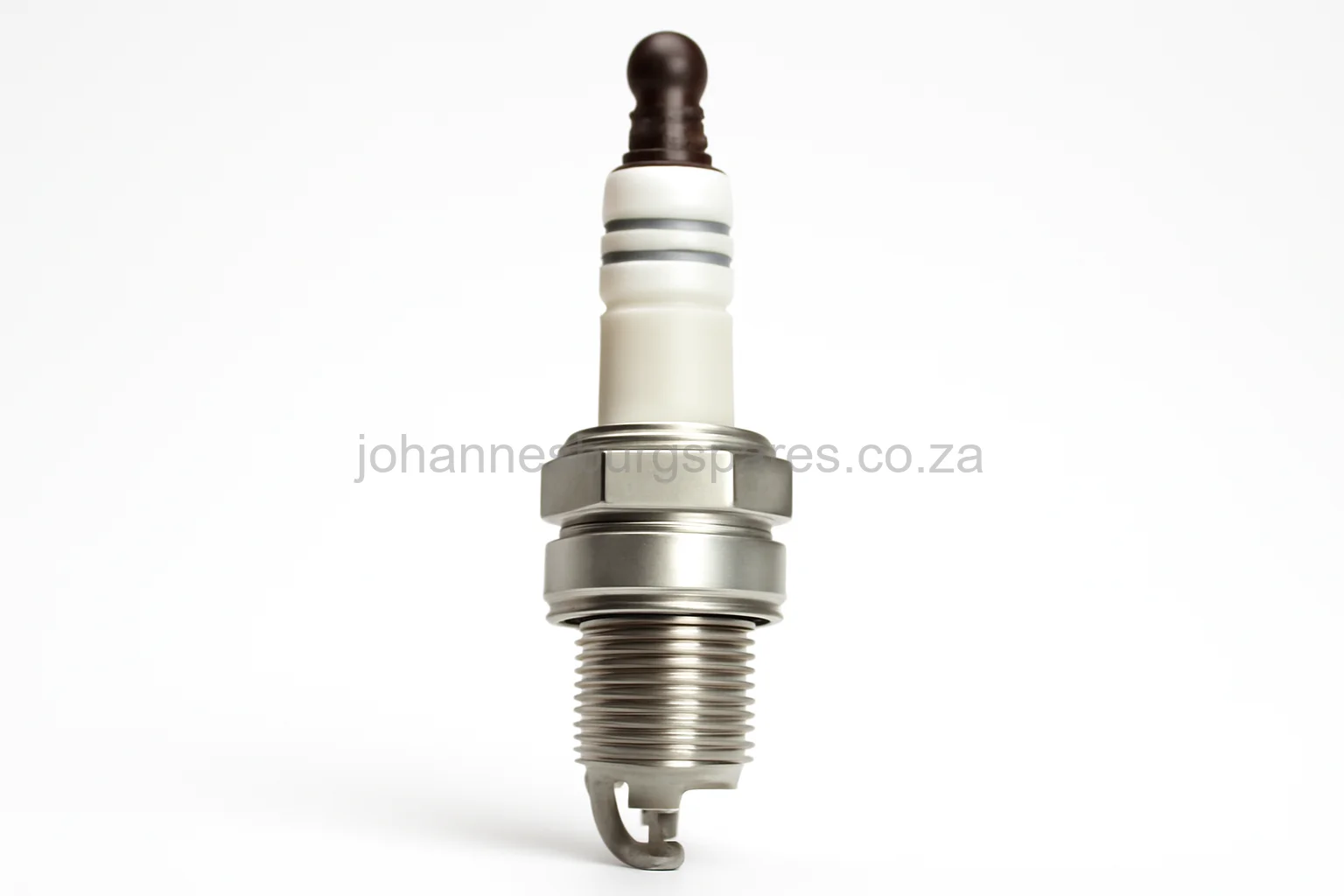
Toyota Spark Plugs
New & quality used stock from our Johannesburg & Cape Town branches — delivered nationwide.
Ignition Coil Replacement Cost in South Africa (2026)
Coil prices vary considerably depending on brand and whether you're buying OEM or aftermarket. These are the ranges listed on our ignition coils page:
Indicative ranges only, not quotes; prices vary by condition, mileage, supplier and labour rate
Coil Type
Price Per Coil (ZAR)
Example
Aftermarket
R265–R650
Hilux / Quantum 2.7 (2TR-FE) from about R265
Genuine Denso (Toyota's OEM coil maker)
R700–R900
Corolla, Hilux, Fortuner and others
For a 4-cylinder Toyota, a full coil set (4 coils) ranges from roughly R1,060 to R3,600 in parts alone. Labour is usually a short job, as each coil-on-plug coil is held by a single bolt and a connector. For model-by-model ranges, see our Toyota ignition coil pricing guide.
Cost-saving tip: If your car is still under 80,000 km and a single coil fails, fitting one Denso OEM-equivalent coil (the same brand Toyota uses at the factory) makes sense. At high mileage, the price difference between a quality aftermarket set and OEM is worth weighing against how long you plan to keep the car.
Frequently Asked Questions
How do I know if my Toyota ignition coil is failing?
The most common signs are engine misfires (a noticeable jerk under acceleration), rough idle at traffic lights, and a check engine light — typically a P030X code indicating which cylinder is affected. Symptoms are often worse on cold starts or at high temperatures.
Can I drive with a bad ignition coil?
You can drive short distances, but continuing to do so causes raw fuel to enter the catalytic converter, damaging it — an expensive repair. It also risks damage to the remaining healthy coils due to increased load sharing. Our guide on driving with a bad ignition coil covers the full risk breakdown.
Do Toyota ignition coils have a warranty?
Warranty terms vary by brand and seller — ask what cover applies before you buy, and keep your receipt in case a coil fails early.
Is it cheaper to replace coils myself?
On most modern Toyotas, coil-on-plug replacement is a genuine DIY job — the coils are accessible with basic hand tools, and each replacement typically takes 10–20 minutes per coil once you have the right part. You'll save the labour charge entirely. Always disconnect the battery before working near the ignition system.
How often should spark plugs and ignition coils be replaced together?
Check the spark plug interval for your engine in your service book. Coils don't have a set interval, but inspecting them at every plug replacement makes sense. At 160,000 km or more, replacing plugs and coils together in one visit is efficient and often reduces labour costs.
Does a Toyota Corolla use a different coil to a Hilux?
Yes — coils are engine specific. The older Corolla 1.8 (1ZZ-FE) takes a different coil (OE 90919-02239) from the later Corolla 1.6/1.8 ZR engines (OE 90919-02258), and the Hilux 2.7 petrol (2TR-FE) uses its own coil (OE 90919-02248); diesel Hilux engines have no ignition coils at all. Always confirm fitment before ordering, and provide your VIN to your supplier if you're unsure.
Related Video
Video: Ignition Coils 101: Function, Lifespan, Bad Coil Symptoms & Extra Tips
This article is for informational and educational purposes only, based on automotive industry research and publicly available data. Used Toyota Parts SA is a parts supplier, not a licensed automotive repair facility. We do not provide mechanical advice or diagnostics.
Always consult a qualified mechanic or Toyota-certified technician before performing repairs. Incorrect installation of parts can lead to vehicle damage, safety hazards, or injury. Prices, specifications, and availability mentioned are approximate and subject to change.
We assume no liability for actions taken based on this content. Contact us for current parts availability and pricing.
Need Toyota Parts?
Get a free quote from our suppliers. New aftermarket and quality used parts for all 37 Toyota models, delivered nationwide.