
Your car’s suspension system is the collection of springs, shock absorbers, control arms, bushings, and anti-roll bars that connects the vehicle body to the wheels and absorbs every impact from the road surface. I get asked about suspension more than almost any other system, and for good reason — it directly affects ride comfort, tyre wear, braking distance, and vehicle safety. In a country where gravel roads, potholes, and heavy loads are everyday realities, understanding what each suspension component does is not optional knowledge. It is essential for any Toyota owner who wants to keep their vehicle safe and avoid bills running into tens of thousands of rands.
Key Takeaways
| Topic | Key Finding | Jump To |
|---|---|---|
| What Suspension Does | Keeps tyres on the road, absorbs impacts, and controls body movement | Read more |
| Core Components | Springs support weight, shocks control movement, control arms locate wheels | Read more |
| Toyota Suspension Types | Hilux uses rear leaf springs; Fortuner, Prado, and Land Cruiser use coil springs all around | Read more |
| Strut vs Wishbone | Double wishbone offers better handling; MacPherson strut is simpler and cheaper | Read more |
| Warning Signs | Bouncing, uneven tyre wear, nose-diving under braking, and clunking noises | Read more |
| Replacement Costs | Shock absorbers R1,200-R4,500 per pair; full overhaul R8,000-R25,000+ | Read more |
| SA Driving Impact | Gravel roads and heavy loads halve suspension component lifespan | Read more |
What Does Your Suspension Actually Do
The suspension system serves three critical functions that most people collapse into one. First, it absorbs road impacts — every pothole, speed bump, gravel ridge, and tar patch your tyres encounter sends kinetic energy upward through the wheels. Without suspension, that energy transfers directly into the vehicle body and, by extension, into your spine.
Second, it maximises tyre-to-road contact. This is the one most owners underestimate. Your ability to brake, accelerate, and corner depends entirely on how much rubber is touching the tarmac at any given moment. Worn suspension components allow the wheel to bounce or skip, reducing the contact patch and dramatically increasing your stopping distance.
Third, it controls body movement — the roll you feel in corners, the nose-dive under heavy braking, and the squat when accelerating. Every one of these movements is managed by your suspension geometry and damping system.
The Simple Test: Push down firmly on one corner of your parked vehicle and release. It should rise back up and settle within one to two bounces. If it keeps bouncing or feels loose, your shock absorbers are likely worn and need inspection.
On any Toyota Hilux or Fortuner driven on South African roads, the suspension takes a beating that European or Japanese road conditions simply cannot replicate. That context matters when we talk about component lifespan and replacement intervals.
Key Suspension Components Explained
Every suspension system, regardless of type, relies on the same fundamental component categories. Here is what each one does and why it matters.
Springs
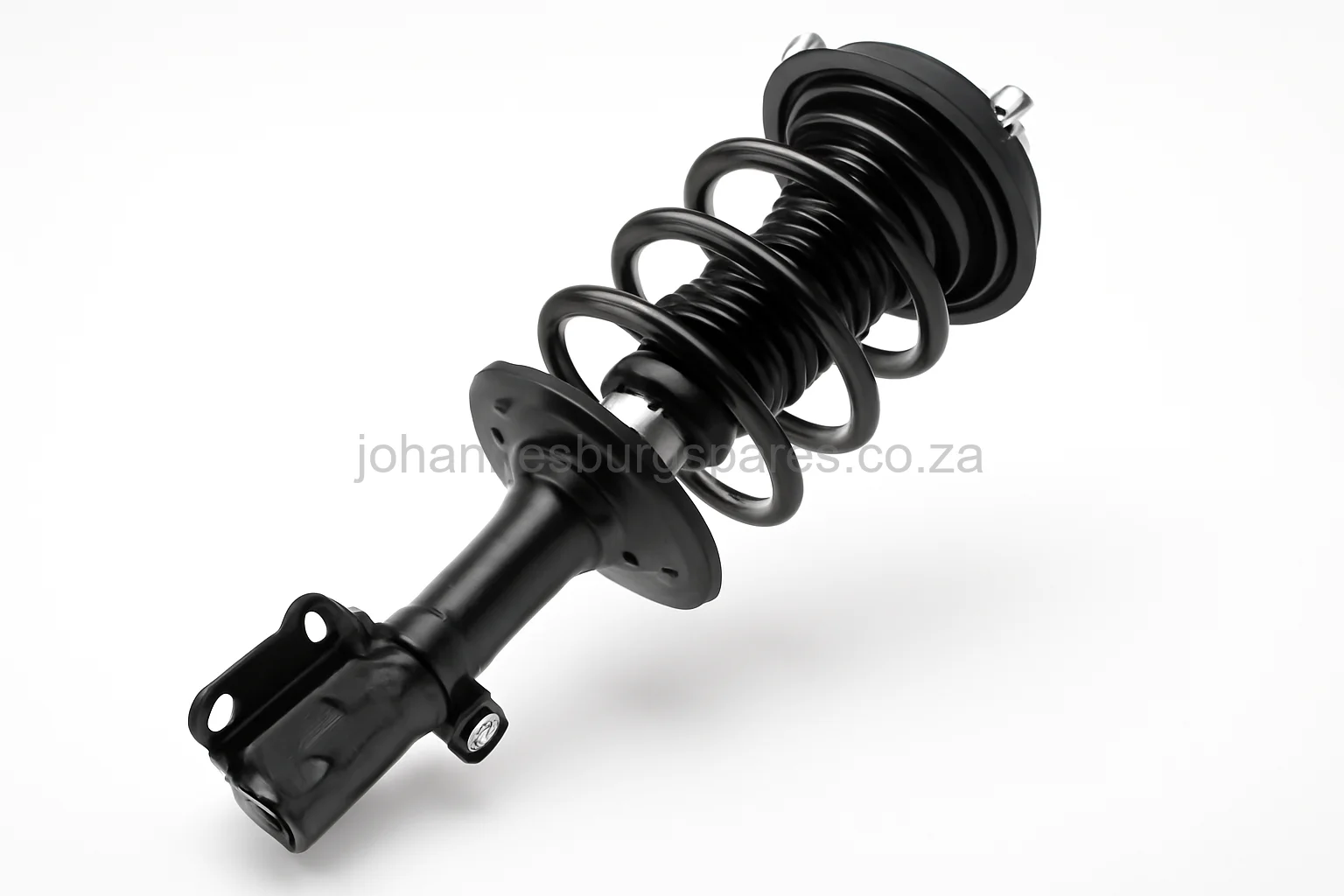
Springs are the primary weight-bearing component of your suspension. They support the entire mass of the vehicle and compress to absorb upward forces from the road. There are three main types:
- Coil springs — The most common type on modern vehicles. A helical steel coil that compresses and extends to absorb impacts. Found on the front and rear of the Fortuner, Prado, and Land Cruiser.
- Leaf springs — Flat, layered steel strips stacked together, clamped to the axle. These are simpler, cheaper, and capable of handling heavy loads, which is why the Hilux uses them on the rear axle. A typical Hilux leaf pack has five main leaves plus helper leaves.
- Torsion bars — A steel rod that twists under load. Used in some older Toyota 4x4 front suspensions. Less common on current models.
Springs define your ride height and load capacity. When a spring sags or breaks, the vehicle sits lower on one side and handling deteriorates immediately.
Shock Absorbers (Dampers)
This is where the most common misunderstanding lives. Shock absorbers do not support the vehicle’s weight — that is the springs’ job. Shocks control the rate at which springs compress and rebound. Without them, your vehicle would bounce endlessly after every bump like a trampoline.
Inside a shock absorber, a piston moves through hydraulic fluid. The resistance of that fluid passing through small valves creates the damping force that controls spring movement. When a shock wears out, it loses this resistance, and the spring bounces freely.
Leaking Shocks Are Failed Shocks
If you see oil residue or wet streaks on a shock absorber body, that unit has lost its hydraulic seal and is no longer providing damping force. Driving on blown shocks increases braking distances by up to 20% and causes accelerated tyre wear.
For Hilux suspension parts and Fortuner suspension components, shock absorbers are the most frequently replaced item. They are consumable components with a finite lifespan.
Control Arms
Control arms are the metal links that connect the wheel hub (via the steering knuckle) to the vehicle’s chassis or subframe. They allow the wheel to move vertically over bumps while keeping it precisely located relative to the body.
- Upper control arm — Found on double wishbone suspensions (all modern Toyota 4x4 front ends). Controls the top of the wheel hub.
- Lower control arm — Present on both MacPherson strut and double wishbone designs. Handles the majority of lateral and longitudinal forces.
Control arms pivot on bushings at the chassis end and connect to the knuckle via ball joints. When bushings wear, you get clunking over bumps and imprecise steering. When a ball joint fails, you can lose wheel control entirely — this is a genuine safety-critical failure.
Bushings
Bushings are rubber or polyurethane sleeves pressed into suspension pivot points. They allow controlled movement while absorbing vibration and noise. Every control arm, anti-roll bar link, and trailing arm uses bushings.
Rubber bushings deteriorate over time from heat, UV exposure, and repeated flexing. Cracked or collapsed bushings introduce play into the suspension, causing:
- Vague steering feel
- Clunking or knocking sounds over bumps
- Accelerated tyre wear from misalignment
- Failed roadworthy inspections
Anti-Roll Bars (Sway Bars)
An anti-roll bar is a U-shaped steel rod that connects the left and right suspension assemblies across the vehicle. When one side of the vehicle compresses (such as during cornering), the bar twists and transfers some of that force to the opposite side, reducing body roll.
Anti-roll bars are mounted to the chassis with rubber bushings and connected to the suspension via drop links (also called sway bar links). These links are small but critical — worn drop links are one of the most common MOT/roadworthy failures and produce a distinctive rattle over rough surfaces.
Budget-Friendly Upgrade: Replacing worn anti-roll bar bushings and drop links is one of the cheapest ways to noticeably improve your Toyota’s cornering stability. Parts typically cost under R500, and the improvement in body control is immediately noticeable.
Toyota Suspension Types by Model
Toyota uses different suspension configurations depending on the vehicle’s purpose. Here is how the most popular models in South Africa are set up:
| Model | Front Suspension | Rear Suspension | Spring Type (Rear) | Primary Use Case |
|---|---|---|---|---|
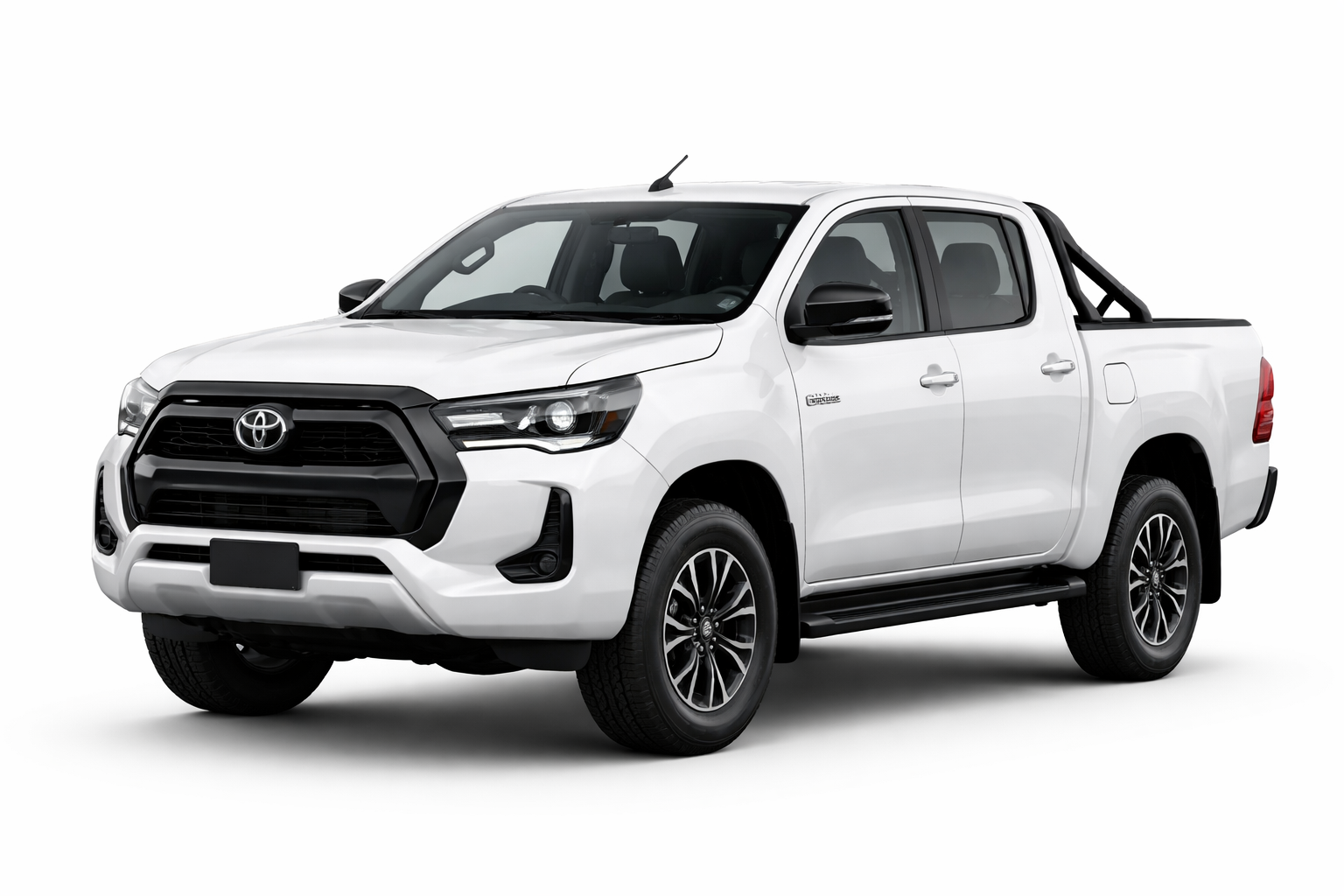
| Hilux (GD-6) | Double wishbone, coil springs | Rigid axle | Leaf springs | Load carrying, commercial use |
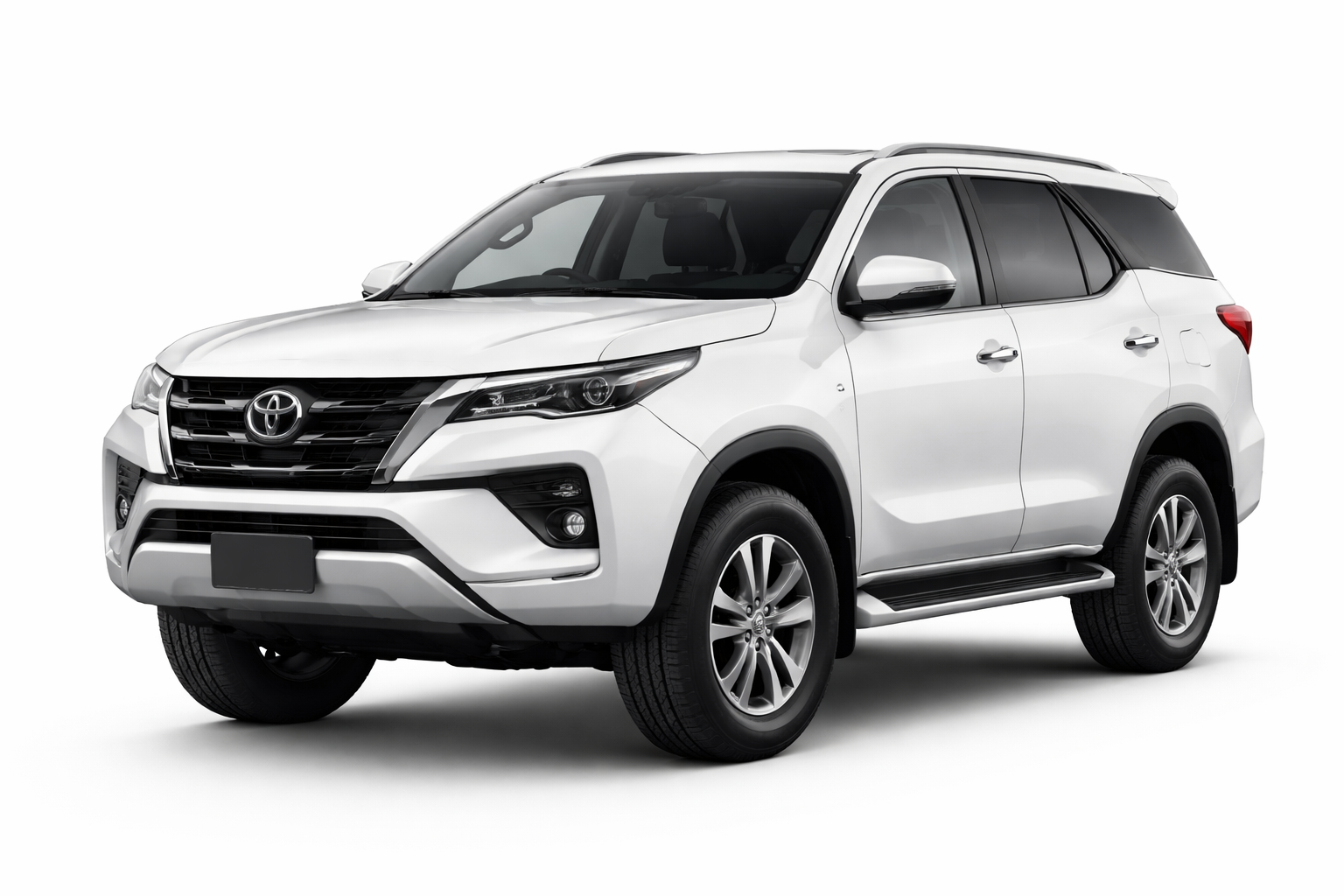
| Fortuner | Double wishbone, coil springs | Multi-link (5-link), coil springs | Coil springs | SUV, passenger comfort + off-road |
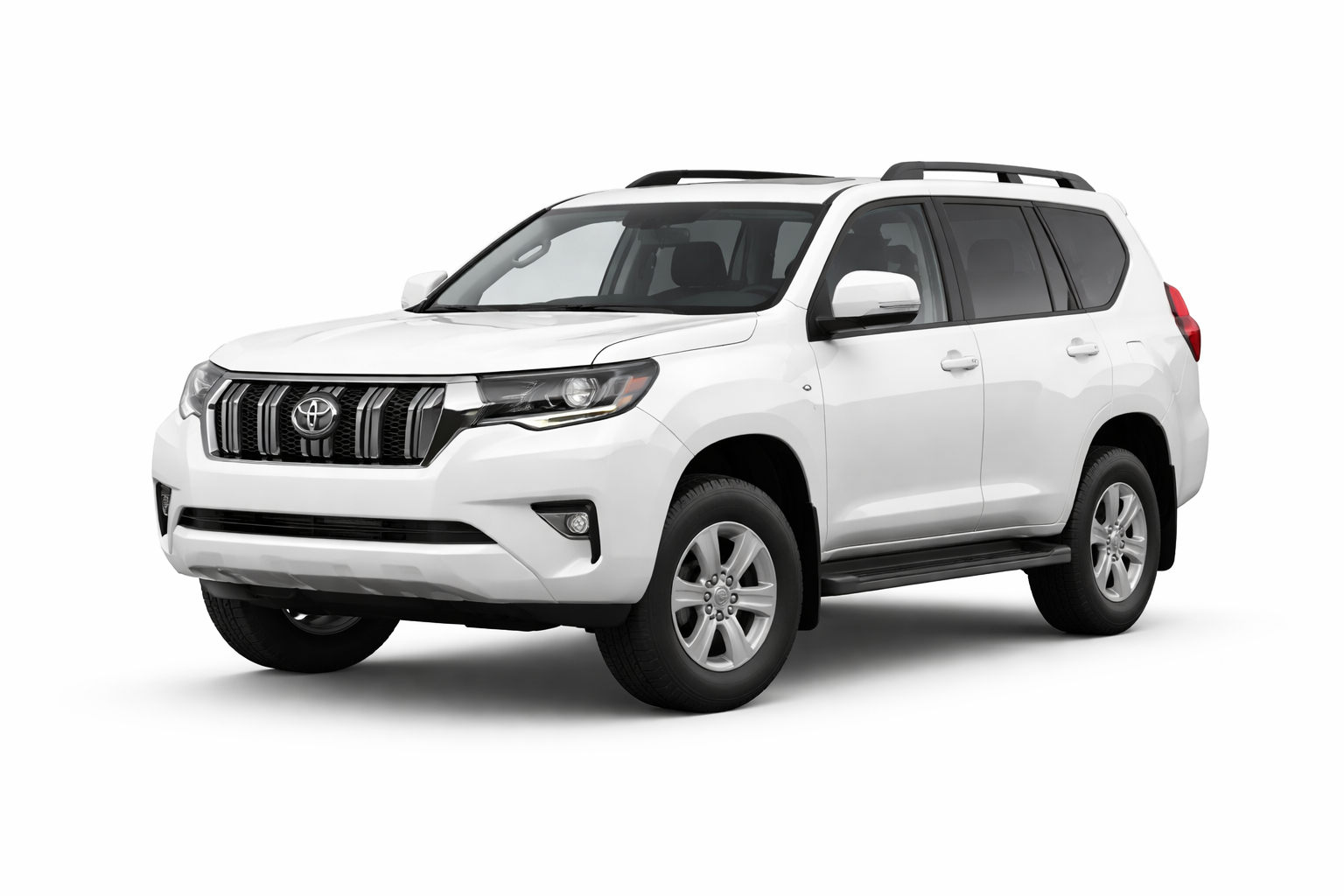
| Prado (150 Series) | Double wishbone, coil springs | 4-link with lateral rod, coil springs | Coil springs | Touring, off-road, towing |
| Land Cruiser (200 Series) | Double wishbone, coil springs | Live axle, coil springs | Coil springs | Heavy-duty off-road, towing |
| Land Cruiser 300 Series | Double wishbone, coil springs | Trailing arm, live axle | Coil springs | Off-road, available E-KDSS |
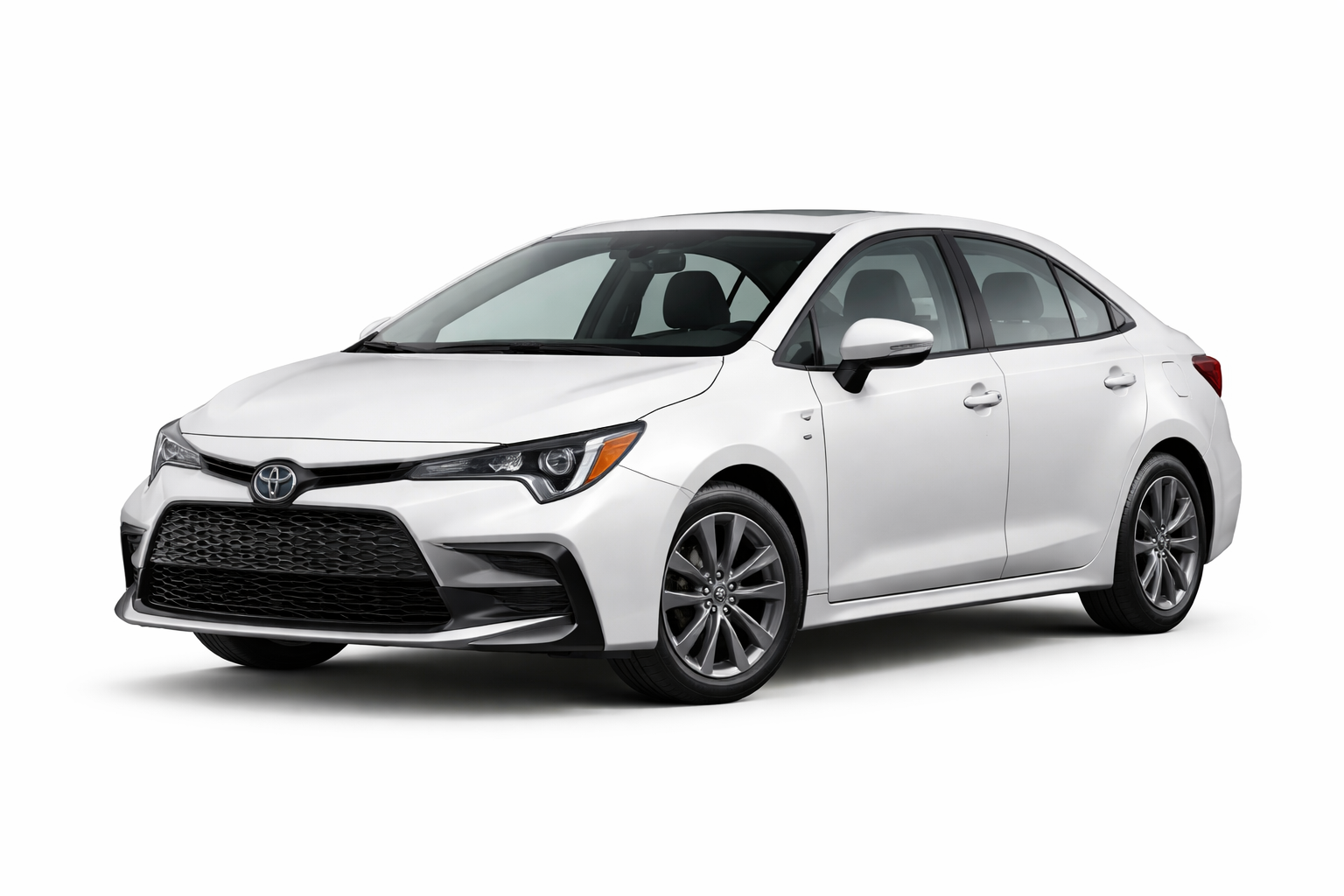
| Corolla | MacPherson strut | Torsion beam | N/A (torsion) | Urban commuting |
| RAV4 | MacPherson strut | Double wishbone or trailing arm | Coil springs | Light SUV, on-road bias |
The key distinction here is between the Hilux and the Fortuner. Despite sharing the same platform (IMV), they use completely different rear suspensions. The Hilux retains leaf springs for load capacity — a leaf spring acts as both spring and axle locator, reducing component count and increasing robustness under heavy payloads. The Fortuner switches to a multi-link coil spring setup that provides significantly better ride comfort for passengers but sacrifices raw load-carrying ability.
Why the Hilux Keeps Leaf Springs: Leaf springs serve double duty — they support the load AND locate the axle laterally and longitudinally. This eliminates the need for separate control arms and trailing links at the rear. For a workhorse bakkie expected to carry 1,000 kg payloads and tow 3,500 kg, this simplicity and strength is essential.
If you are looking for Hilux suspension components or Fortuner suspension parts, knowing which system your vehicle uses is the first step to ordering the correct parts.
MacPherson Strut vs Double Wishbone
These are the two most common independent front suspension designs, and Toyota uses both across its range. Understanding the difference helps explain why your Corolla rides differently from your Hilux.
MacPherson Strut
The MacPherson strut combines the shock absorber and spring into a single assembly that also serves as the upper steering pivot. It uses one lower control arm and no upper control arm — the strut itself replaces it.
Advantages:
- Fewer parts, lower manufacturing and repair cost
- Compact design leaves more room for the engine bay
- Lighter weight improves fuel efficiency
- Simpler to service
Disadvantages:
- Less precise camber control during suspension travel
- Taller design raises the vehicle’s centre of gravity
- Limited tuning options for performance applications
Toyota uses MacPherson struts on the Corolla, Yaris, Starlet, and the front of some RAV4 models.
Double Wishbone
A double wishbone suspension uses two A-shaped control arms (upper and lower) to locate the wheel. The shock absorber and spring are separate from the steering geometry, giving engineers far more freedom to optimise each parameter independently.
Advantages:
- Superior camber control maintains tyre contact in corners
- Lower ride height possible without sacrificing travel
- Better handling precision and feedback
- More tunable for different driving conditions
Disadvantages:
- More components mean higher cost and complexity
- Heavier overall assembly
- More pivot points that can wear over time
- Takes up more horizontal space
Toyota uses double wishbone front suspension on the Hilux, Fortuner, Prado, Land Cruiser, and the Tacoma. This is a deliberate choice — these vehicles need to maintain wheel control over rough terrain at speed, where camber changes from a MacPherson strut would reduce grip.
Performance Difference: Double wishbone suspension maintains a more consistent tyre contact patch through suspension travel. In off-road conditions, this translates to better traction, more predictable handling, and reduced tyre wear compared to a MacPherson strut design covering the same terrain.
Signs Your Suspension Needs Attention
Suspension components wear gradually, which makes it easy to adapt to deteriorating performance without realising it. Here are the warning signs I always tell Toyota owners to watch for:
1. Excessive Bouncing After Bumps
If your vehicle continues bouncing two or more times after hitting a bump, your shock absorbers have lost their damping ability. This is the classic and most reliable indicator of worn shocks.
2. Uneven Tyre Wear
Look for cupping or scalloping — a pattern of alternating high and low spots around the tyre tread. This happens when worn shocks allow the tyre to bounce, creating intermittent contact with the road. If you are replacing tyres more often than expected, check your suspension before fitting new rubber.
3. Nose-Dive When Braking
When you brake firmly and the front of the vehicle dips dramatically toward the road, your front shocks or struts are not controlling weight transfer properly. This increases your stopping distance and is genuinely dangerous in emergency braking situations.
4. Vehicle Leans or Sits Low on One Side
A sagging corner indicates a broken or fatigued spring. On the Hilux, check the rear leaf springs — a cracked leaf will cause one side to sit lower, especially when loaded. On the Fortuner and Prado, inspect coil springs for fractures.
5. Clunking or Knocking Sounds
Metallic clunking over bumps almost always points to worn bushings, ball joints, or drop links. The sound comes from metal-to-metal contact where a rubber bushing should be providing a cushion.
6. Steering Wander or Pulling
If the vehicle drifts to one side or the steering feels vague and disconnected, worn control arm bushings or a damaged ball joint may have shifted your wheel alignment beyond adjustment range.
Safety Warning: Ball Joint Failure
A worn ball joint that separates completely causes the wheel to collapse outward from the vehicle. This is a catastrophic, unrecoverable failure at any speed. If you hear popping or creaking from the front suspension during turning, have the ball joints inspected immediately.
7. Fluid Leaks on Shock Bodies
Visible oil on the outside of a shock absorber tube means the internal seal has failed. That shock is no longer functioning and needs replacement. Check by looking behind each wheel — the shock body is usually visible without removing anything.
Suspension Replacement Costs in South Africa
Suspension work ranges from affordable maintenance items to significant repairs. Here is what you can expect to pay at a reputable workshop using quality replacement parts:
| Component | Cost Per Unit (ZAR) | Typical Labour (ZAR) | Notes |
|---|---|---|---|
| Shock absorbers (pair) | R1,200 - R4,500 | R800 - R1,500 | Always replace in pairs (front or rear) |
| Coil springs (pair) | R1,500 - R3,500 | R800 - R1,500 | Replace in pairs for even ride height |
| Leaf springs (per side) | R2,000 - R5,500 | R1,000 - R2,000 | Hilux rear; consider full pack replacement |
| Upper control arm (each) | R1,200 - R3,500 | R600 - R1,200 | Includes ball joint on most Toyota designs |
| Lower control arm (each) | R1,500 - R4,000 | R800 - R1,500 | Bushing and ball joint included |
| Ball joint (each) | R400 - R1,200 | R500 - R1,000 | Some arms require full replacement |
| Control arm bushings (set) | R300 - R900 | R600 - R1,200 | Labour-intensive; pressing required |
| Anti-roll bar drop links (pair) | R300 - R800 | R300 - R500 | Quick replacement; common wear item |
| Anti-roll bar bushings (pair) | R150 - R400 | R200 - R400 | Simple DIY job on most Toyotas |
| Full front suspension overhaul | R8,000 - R18,000 | Included | Shocks, arms, bushings, ball joints, alignment |
| Full rear suspension overhaul | R5,000 - R15,000 | Included | Shocks, springs, bushings, alignment |
Used Parts Can Save 40-60%
OEM-quality used suspension components from low-mileage donor vehicles are a practical alternative to new parts, especially for control arms and complete strut assemblies. A used upper control arm for a Hilux typically costs R600-R1,500 compared to R2,000-R3,500 new. Browse our Hilux suspension and Fortuner suspension stock for current availability.
Important note on alignment: Any suspension component replacement that affects wheel geometry requires a four-wheel alignment afterwards. Budget R450-R650 for a professional alignment. Skipping this step will destroy your new tyres within months.
Heavy Loads and Gravel Roads - SA Driving Impact on Suspension
South African driving conditions are uniquely punishing on suspension systems, and I think this deserves its own section because international maintenance intervals simply do not apply here.
The Gravel Road Problem
Approximately 80% of South Africa’s road network is unpaved. Gravel roads subject suspension components to continuous high-frequency vibration and repeated medium impacts that accelerate bush wear, shock absorber fatigue, and spring settling. A Hilux driven daily on gravel will need shock absorber replacement at 60,000-80,000 km rather than the 100,000-120,000 km you might expect on tar.
Load Impact on Rear Suspension
The Hilux is rated for a payload of approximately 1,000 kg, but many owners routinely exceed this. Overloading does not just risk the leaf springs — it dramatically accelerates wear on shock absorbers, bump stops, and U-bolts. Leaf springs that are chronically overloaded develop a reverse arch, sitting flat or bowing downward instead of curving upward, and at that point they offer almost no suspension travel.
Upgrade Worth Considering: If you regularly carry heavy loads or tow with your Hilux, a set of heavy-duty or constant-load leaf springs (rated for an additional 250-300 kg) with matched shock absorbers costs R6,000-R12,000 fitted and dramatically improves both safety and component longevity.
Pothole Damage
Single large impacts — the kind you get from an unseen pothole at 80 km/h — cause different damage patterns than chronic gravel vibration. A hard pothole strike can bend a control arm, crack a spring, or blow a shock absorber in a single hit. After any significant impact, inspect the affected corner for:
- Visible damage to the wheel rim
- Tyre sidewall bulges
- Fluid leaks from the shock absorber
- New pulling or tracking issues
- Unusual noises from the suspension area
Dust Contamination
Fine dust from gravel roads works its way into every seal and pivot point. Shock absorber seals are particularly vulnerable — dust acts as an abrasive paste that gradually wears the rod seal, leading to premature leaking. Vehicles driven regularly on dusty roads benefit from shock absorbers with dust boots (protective rubber covers over the piston rod) kept in good condition.
My Recommendation for SA Toyota Owners
Based on everything I have researched, here is a practical inspection schedule for Toyota owners driving in typical South African conditions:
| Interval | Check |
|---|---|
| Every 10,000 km | Visual inspection of shocks for leaks, tyre wear patterns |
| Every 20,000 km | Check all bushings and ball joints for play |
| Every 40,000 km | Professional suspension inspection with measurements |
| Every 60,000-80,000 km | Expect shock absorber replacement (gravel road users) |
| Every 80,000-120,000 km | Budget for bushing replacement and possible spring assessment |
If you are maintaining a Fortuner, Prado, or Land Cruiser that sees regular off-road use, the same accelerated schedule applies. The coil spring setup on these vehicles is more comfortable than leaf springs, but it is not immune to SA conditions — cracked coil springs are common on high-mileage Prados, particularly the front springs which bear the weight of the engine.
Keeping your suspension in good condition is not just about comfort. It is about tyre life, braking performance, and the safety of everyone in the vehicle. A set of worn shock absorbers costs a fraction of what you will spend on premature tyre replacements and brake wear caused by poor wheel control. Stay on top of it, and your Toyota’s suspension will deliver hundreds of thousands of reliable kilometres.