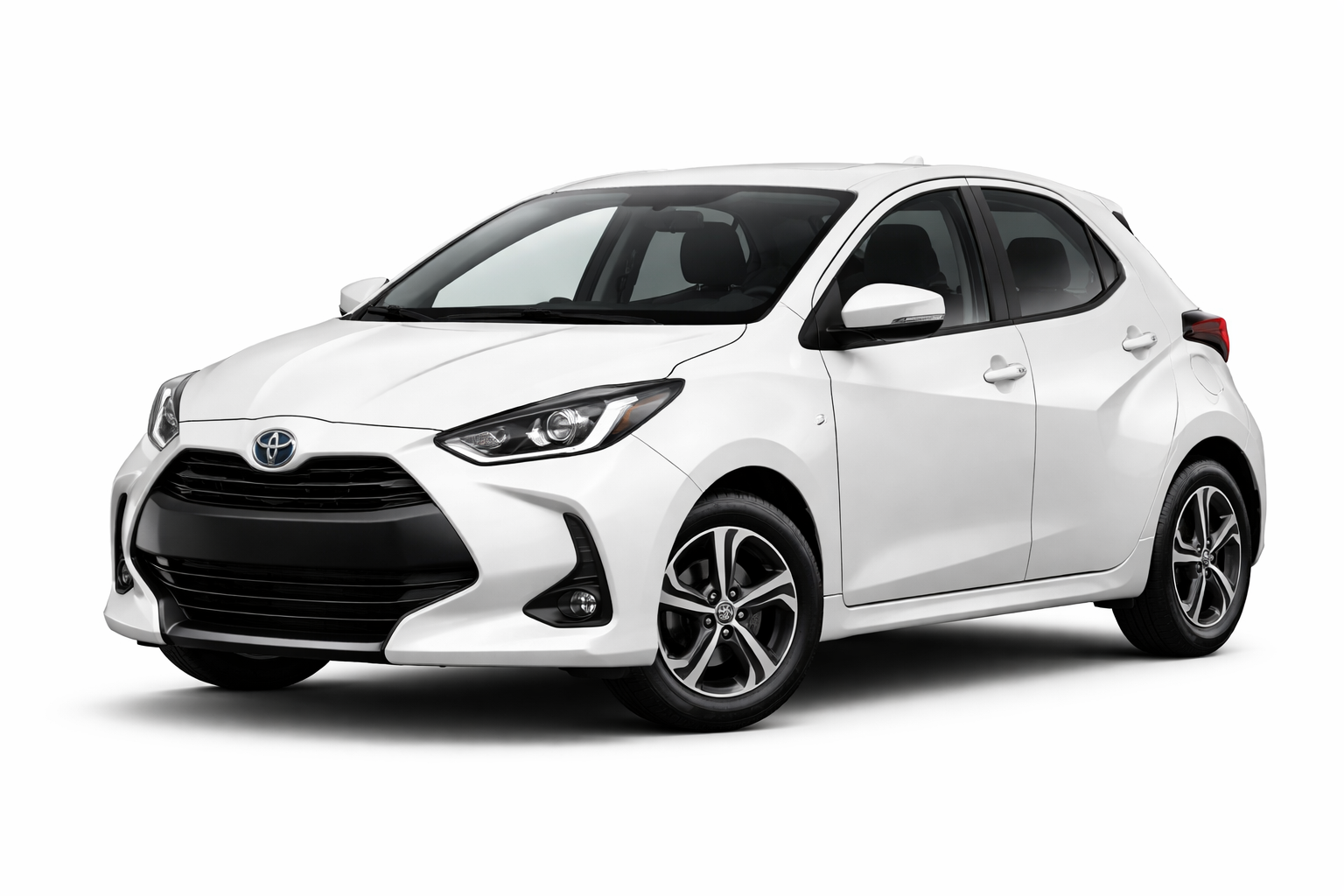


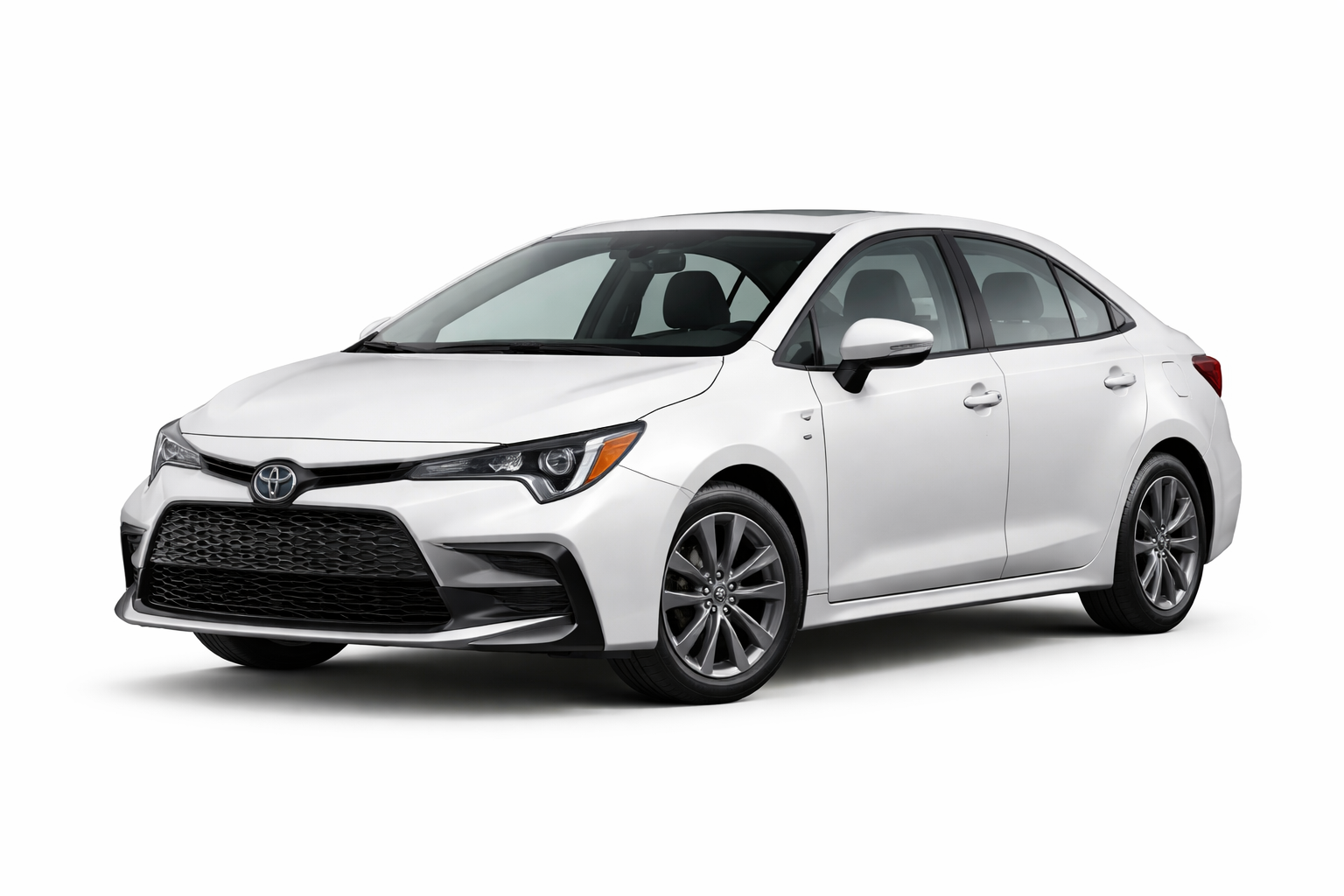
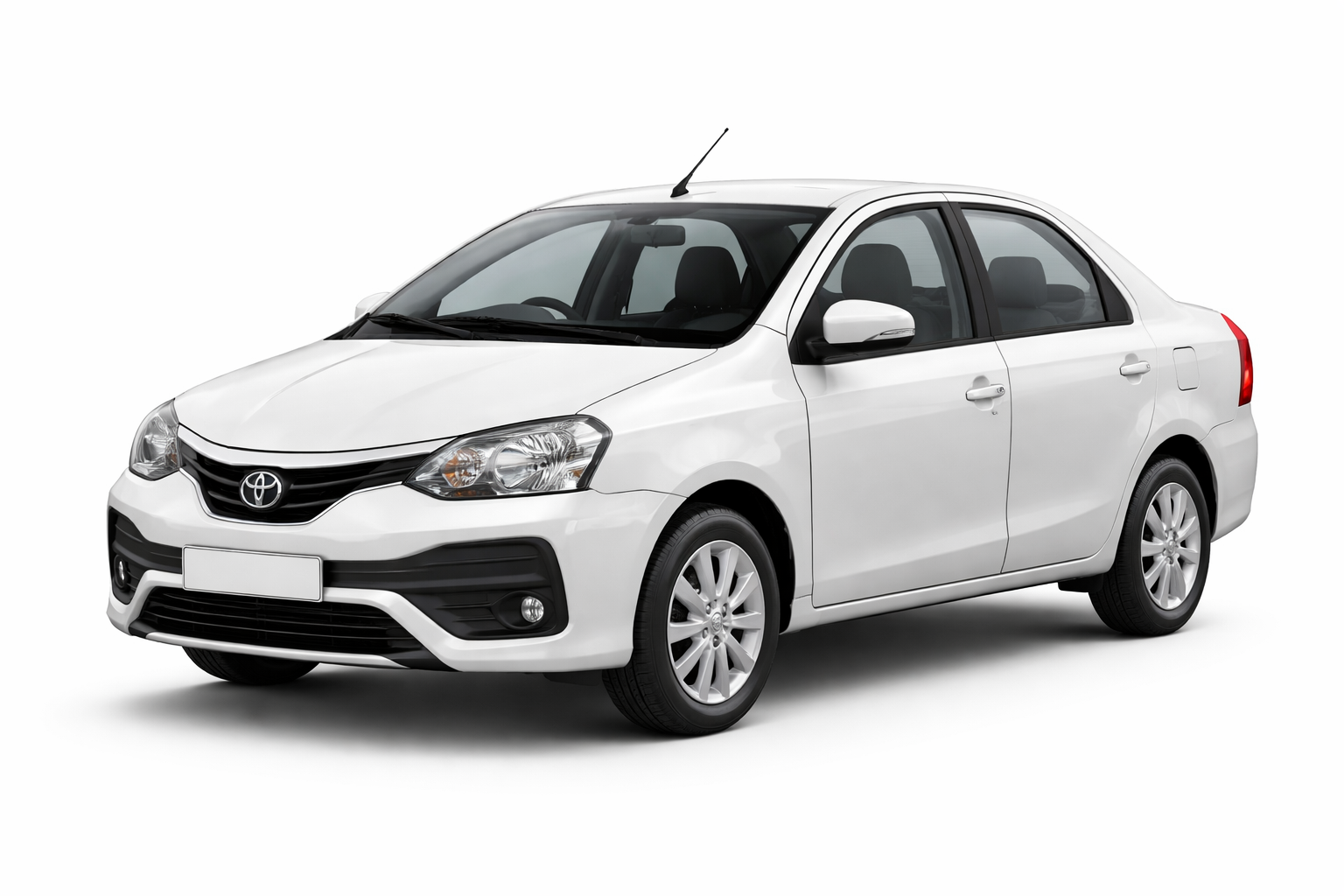
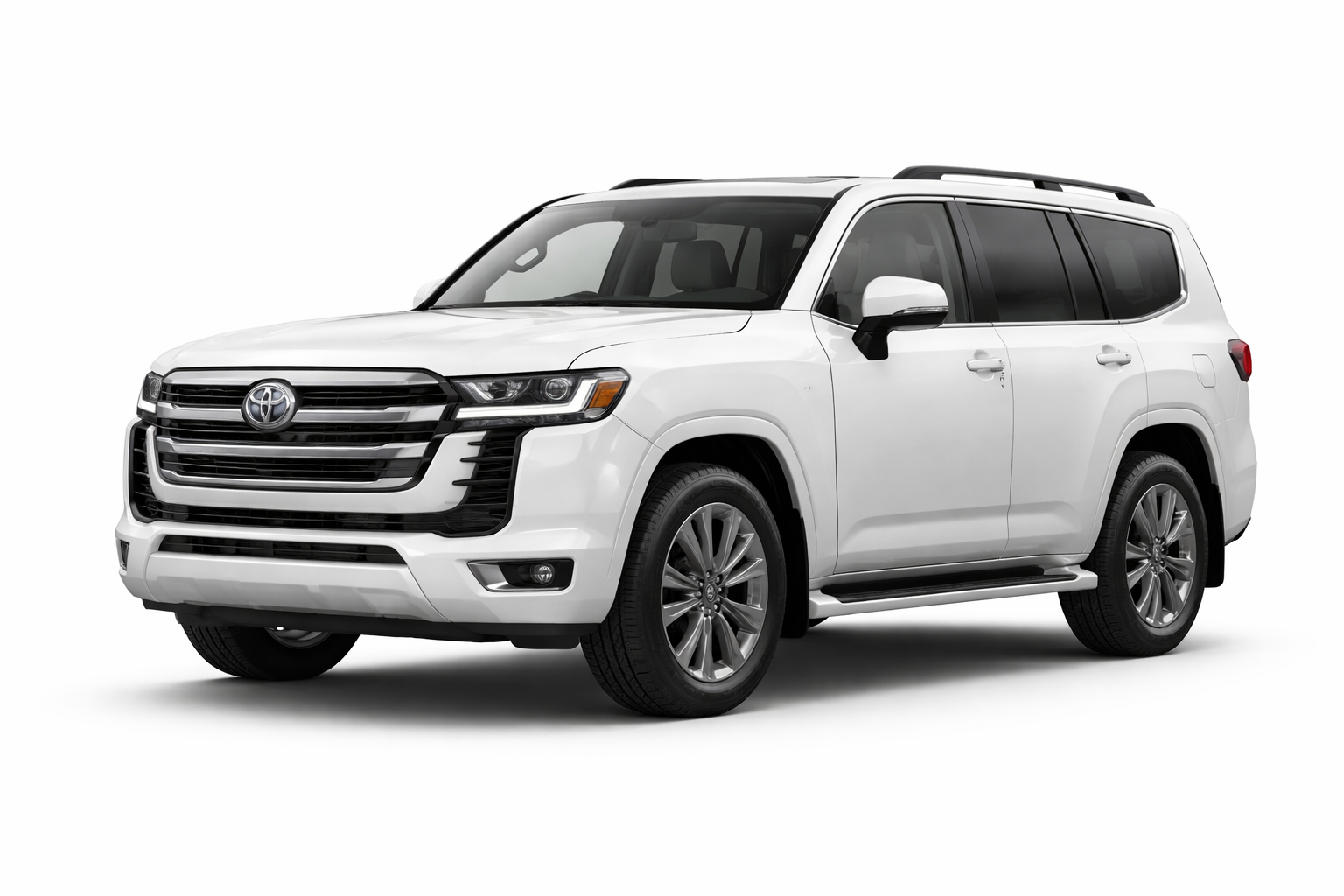

Your Toyota’s cabin air filter is the one component standing between you and every particle of dust, pollen, exhaust fume, and mould spore on the road — and most owners never think about it. A clogged cabin filter can reduce your air conditioning airflow by up to 40%, expose you to bacteria concentrations as high as 70 million CFU per square metre, and leave you breathing genuinely unhealthy air. Whether you drive a Hilux, Fortuner, Corolla, or Yaris, the cabin filter is one of the cheapest and easiest maintenance items to replace — and ignoring it costs you in both health and comfort.
Key Takeaways
| Topic | Key Finding | Jump To |
|---|---|---|
| What It Does | Filters dust, pollen, exhaust, and mould from cabin air | What Is a Cabin Air Filter |
| Filter Types | Standard particulate, activated carbon, and HEPA options available | Types of Cabin Filters |
| Change Interval | Every 15,000-20,000 km or once per year (whichever comes first) | When to Change It |
| Warning Signs | Musty smell, weak AC airflow, foggy windows, allergies while driving | Signs It Needs Replacing |
| Health Risks | Mould, bacteria, and allergens linked to respiratory illness and allergic reactions | Health Impact |
| Cost in ZAR | R200-R600 for filter only; R400-R900 fitted at a workshop | Costs for Toyota Models |
| Location | Behind the glove box on virtually all Toyota models | Where Is It Located |
| DIY Difficulty | Easy — 5 to 10 minutes, no tools required on most models | DIY Replacement Guide |
What Is a Cabin Air Filter
The cabin air filter (also called a pollen filter) is a pleated filter element inside your Toyota’s HVAC system. Its job is simple: clean every litre of outside air before it reaches you and your passengers.
According to MANN-FILTER, up to 540,000 litres of air flow through a car’s ventilation ducts per hour. Without a functional cabin filter, all the dust, pollen, diesel soot, and industrial pollutants in that air enter the cabin unfiltered.
Good to know: The cabin air filter is completely separate from your engine air filter. Your engine filter protects the motor from ingesting particles. The cabin filter protects you. Both need regular replacement, but they serve entirely different purposes.
A properly functioning cabin filter captures between 90% and 99% of airborne particles in the 5 to 100 micron range, including pollen, mould spores, and fine dust. The result is a noticeably cleaner environment inside your Corolla or Hilux cabin.
Types of Cabin Filters
Not all cabin filters are created equal. There are three main types available for Toyota vehicles, each offering a different level of protection.
Standard Particulate Filters
This is what your Toyota was most likely fitted with from the factory. Standard filters are made from synthetic fibre media that physically traps dust, pollen, and other particles. According to FRAM, they catch between 90% and 99% of particles ranging from 5 to 100 microns.
Best for: Everyday driving in areas with moderate dust and pollen levels. If you drive your Yaris mainly on sealed city roads, a standard filter does the job well.
Typical cost: R150-R350
Activated Carbon Filters
Activated carbon filters add a charcoal layer to the standard media. The carbon’s millions of microscopic pores trap gases and odours at a molecular level, filtering out VOCs, exhaust fumes, and unpleasant smells in addition to particles.
Best for: Heavy traffic commuters and drivers near industrial areas. If your Fortuner sits in Johannesburg or Durban traffic daily, an activated carbon filter is worth the premium.
Typical cost: R300-R600
HEPA Filters
HEPA (High Efficiency Particulate Air) filters represent the highest level of cabin filtration, capturing 99.97% of particles down to 0.3 microns — including bacteria, ultra-fine dust, and virus-carrying droplets.
Recommendation: If anyone in your vehicle suffers from asthma, hay fever, or other respiratory sensitivities, a HEPA-grade cabin filter is the single best upgrade you can make to your driving environment. The extra R100-R200 over a standard filter is negligible compared to the health benefit.
Best for: Allergy sufferers, families with young children, and anyone prioritising the cleanest possible cabin air.
Typical cost: R400-R800
Quick Comparison Table
| Feature | Standard Particulate | Activated Carbon | HEPA |
|---|---|---|---|
| Dust and pollen | Yes | Yes | Yes |
| Exhaust fumes and odours | No | Yes | No |
| Ultra-fine particles (< 1 micron) | No | No | Yes |
| Bacteria and mould spores | Partial | Partial | Yes (99.97%) |
| Average cost (ZAR) | R150-R350 | R300-R600 | R400-R800 |
| Recommended change interval | 15,000 km | 15,000 km | 12,000-15,000 km |
When to Change Your Toyota Cabin Filter
Toyota recommends replacing the cabin air filter every 15,000 to 20,000 km, or at least once per year — whichever comes first. This aligns with RepairPal recommendations. However, your actual interval should depend on your driving environment, and South African conditions can be particularly harsh on cabin filters.
South African conditions matter: If you drive on gravel roads, through construction zones, or in dusty highveld conditions, your cabin filter may need replacing every 10,000 km — sometimes even sooner. I have seen filters pulled from Hilux bakkies after just 8,000 km of farm use that were completely saturated.
Factors That Shorten Filter Life
- Gravel and dirt roads — Dramatically higher dust load
- Construction zones — Concrete dust clogs filters rapidly
- Heavy traffic — Higher exhaust particulate concentration
- Coastal and humid climates — Moisture promotes mould growth
- Highveld spring — Extreme pollen counts from August to October
- Veld fires — Smoke and ash saturate filters quickly
Toyota Model-Specific Intervals
| Model | Recommended Interval | Notes |
|---|---|---|
| Toyota Corolla | 15,000 km / 12 months | Standard city driving |
| Toyota Hilux | 10,000-15,000 km | Shorten interval for off-road or farm use |
| Toyota Fortuner | 15,000 km / 12 months | Shorten if towing or off-road frequently |
| Toyota Yaris | 15,000 km / 12 months | Urban commuting interval |
| Toyota Etios | 15,000 km / 12 months | Check more often in dusty areas |
Signs Your Cabin Filter Needs Replacing
You do not need to wait for a scheduled service to know your cabin filter is due. These are the clear indicators.
Reduced Airflow from AC Vents
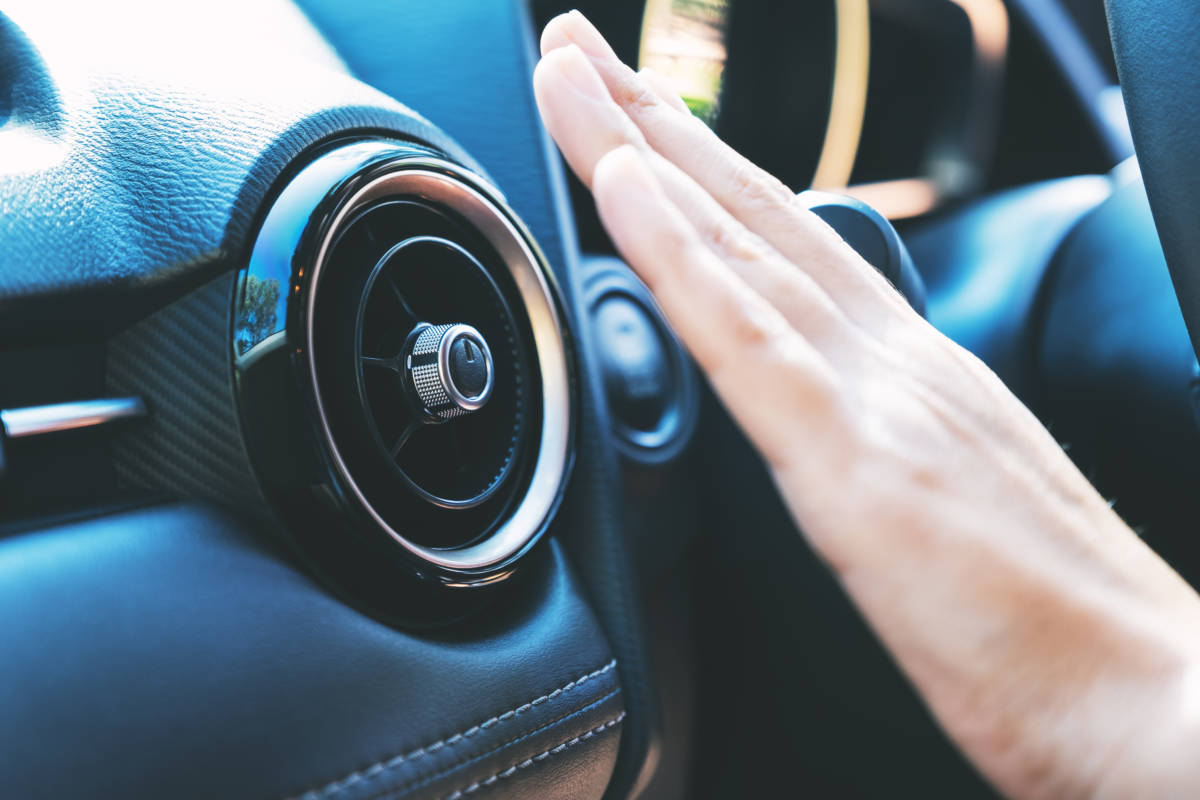
When airflow feels noticeably weaker even on the highest fan setting, a clogged cabin filter is the most likely cause. According to FilterBuy, a dirty cabin filter can reduce airflow by up to 40%, forcing your AC system to work significantly harder.
Musty or Unpleasant Smell
A stale, musty odour when you switch on the AC often indicates mould or bacteria growth on the filter media. This is especially common in humid coastal areas like Durban and Cape Town.
Foggy or Slow-to-Clear Windows
If your windscreen takes longer than usual to demist, restricted airflow through a clogged cabin filter is a likely cause.
Increased Allergy Symptoms While Driving
More sneezing, itchy eyes, or a scratchy throat while in the car suggests the cabin filter is no longer trapping allergens effectively.
Research finding: A peer-reviewed study published in Air Quality, Atmosphere & Health (Springer) found that used cabin filters contained an average fungal concentration of 72 million CFU per square metre, with Aspergillus and Cladosporium as the dominant species — both known triggers for respiratory issues.
Unusual Noise from the Blower Motor
A severely clogged filter creates back-pressure against the blower fan, producing a whining or straining sound.
Health Impact of a Dirty Cabin Filter
The air inside your car cabin can be significantly more polluted than the air outside if the filter is compromised. This is the most important reason to stay on top of cabin filter changes.
What You Are Actually Breathing
MANN-FILTER research found that every third vehicle interior tested was contaminated with bacteria, mould, particulate matter, and harmful gases. A neglected cabin filter becomes a contamination source itself as mould colonies establish in the damp filter media.
Specific Health Risks
According to CARFAX, failing to change your cabin filter can lead to:
- Allergic reactions — Pollen, dust mites, and mould spores trigger hay fever, sneezing, and itchy eyes
- Respiratory problems — Prolonged exposure to airborne mould and bacteria can aggravate asthma and bronchitis
- Headaches and fatigue — Poor air quality and recirculated exhaust fumes containing carbon monoxide contribute to driver fatigue
- Elevated heart rate and blood pressure — Linked to fine particulate exposure during commuting
For families: Children, elderly passengers, and anyone with compromised immune systems are especially vulnerable. If you regularly drive passengers in these categories, treat cabin filter changes as a non-negotiable maintenance item — not an optional extra.
The Mould Problem
When your AC runs, condensation forms on the evaporator core behind the cabin filter. If the filter holds organic debris, this creates an ideal environment for mould growth. Once established, mould continuously releases spores into your cabin every time the blower runs.
Cabin Filter Costs for Toyota Models
Cabin filter maintenance is genuinely affordable. The filter is one of the cheapest components on your Toyota, and labour is minimal due to easy access.
Bottom line: Cabin filter replacement is one of the highest-value maintenance items on any Toyota. For R200-R600, you get measurably better air quality, stronger AC performance, and reduced strain on your blower motor. There is no good reason to skip it.
Filter Costs by Type (ZAR)
| Filter Type | Aftermarket | OEM Toyota Genuine |
|---|---|---|
| Standard particulate | R150-R250 | R250-R400 |
| Activated carbon | R250-R450 | R400-R600 |
| HEPA grade | R400-R600 | R500-R800 |
Total Replacement Cost by Model (ZAR)
| Model | Filter Only (Aftermarket) | Fitted at Workshop | Fitted at Dealer |
|---|---|---|---|
| Toyota Corolla | R180-R350 | R400-R650 | R550-R900 |
| Toyota Hilux | R200-R400 | R450-R700 | R600-R950 |
| Toyota Fortuner | R200-R400 | R450-R700 | R600-R950 |
| Toyota Yaris | R150-R300 | R350-R600 | R500-R850 |
| Toyota Etios | R150-R300 | R350-R600 | R500-R800 |
According to YourMechanic and RepairPal, labour typically accounts for R200-R400 at an independent workshop or R350-R500 at a dealership. Given the DIY process takes under 10 minutes with no tools, this is one of the easiest ways to save on servicing costs.
Where Is the Cabin Filter Located in Toyota Vehicles
On virtually every modern Toyota sold in South Africa, the cabin air filter is located behind the glove box on the passenger side.
Location by Model
| Model | Filter Location | Access Method |
|---|---|---|
| Corolla (2002+) | Behind glove box | Drop glove box down by squeezing side tabs |
| Hilux (2016+) | Behind glove box | Drop glove box, remove filter housing cover |
| Fortuner (2016+) | Behind glove box | Same as Hilux (shared platform) |
| Yaris (2006+) | Behind glove box | Drop glove box, slide filter out |
| Etios (2012+) | Behind glove box | Drop glove box, remove rectangular cover |
Note on older models: Some pre-2002 Toyota models (particularly the older Corolla and Hilux ranges) either had the cabin filter located under the dashboard cowl at the base of the windscreen, or did not come equipped with a cabin filter at all. If your vehicle is older than 2002, check your owner’s manual for the specific location — or consult your nearest Toyota dealer.
Can You Replace It Yourself
Absolutely. Replacing your Toyota’s cabin air filter is one of the simplest DIY maintenance tasks you can perform. No tools are required on most models, and the entire process takes between 5 and 10 minutes.
Step-by-Step DIY Guide
What you need:
- A new cabin air filter (correct part number for your Toyota model)
- That is it — no tools required on most models
Step 1: Empty and Open the Glove Box
Clear everything out of your glove box. Look for the small plastic restraining arm on the right side that limits how far the glove box opens. Unhook or unclip this arm.
Step 2: Squeeze the Side Tabs
Gently squeeze both sides of the glove box inward. This releases the side tabs from their slots, allowing the glove box to drop down and hang from its hinges, revealing the cabin filter housing.
Step 3: Remove the Filter Housing Cover
You will see a rectangular cover with squeeze tabs or clips on either side. Press these tabs inward and pull the cover toward you.
Step 4: Remove the Old Filter
Slide the old cabin filter out. Take note of the airflow direction arrow printed on the side — you need to install the new one facing the same way.
Pro tip: Before inserting the new filter, use a damp cloth to wipe out the filter housing. Dust and debris accumulate in the housing itself, and cleaning it takes just 30 seconds but ensures maximum airflow through the new filter.
Step 5: Install the New Filter
Slide the new filter into the housing with the airflow arrow pointing in the same direction as the old one (typically downward or toward the rear of the vehicle).
Step 6: Reassemble
Replace the filter housing cover, push the glove box back up, squeeze the sides to re-engage the tabs, and reattach the restraining arm.
Step 7: Test
Start the engine, turn on the AC, and confirm airflow feels normal. You should notice an immediate improvement if the old filter was clogged.
Common Mistakes to Avoid
- Installing the filter backwards — Always match the airflow direction arrow
- Forcing the filter — If it does not slide in easily, check that you have the correct part number
- Forgetting the restraining arm — Your glove box will not close properly without it
- Not cleaning the housing — Debris in the housing reduces the new filter’s effectiveness
When to Leave It to a Professional
If the old filter is heavily contaminated with mould, have the entire HVAC system cleaned. If the blower motor makes unusual noises even after replacement, the motor may need inspection. A persistent musty smell after fitting a new filter suggests the evaporator core needs anti-fungal treatment.
For Toyota HVAC and air conditioning parts, browse our Corolla engine parts and Hilux engine parts pages.
The cabin air filter costs almost nothing to replace but makes a measurable difference to your daily driving experience. If you cannot remember the last time yours was changed, it is almost certainly overdue. A five-minute job and a R200-R600 filter is all it takes to breathe cleaner air and get stronger AC performance. Just replace it.