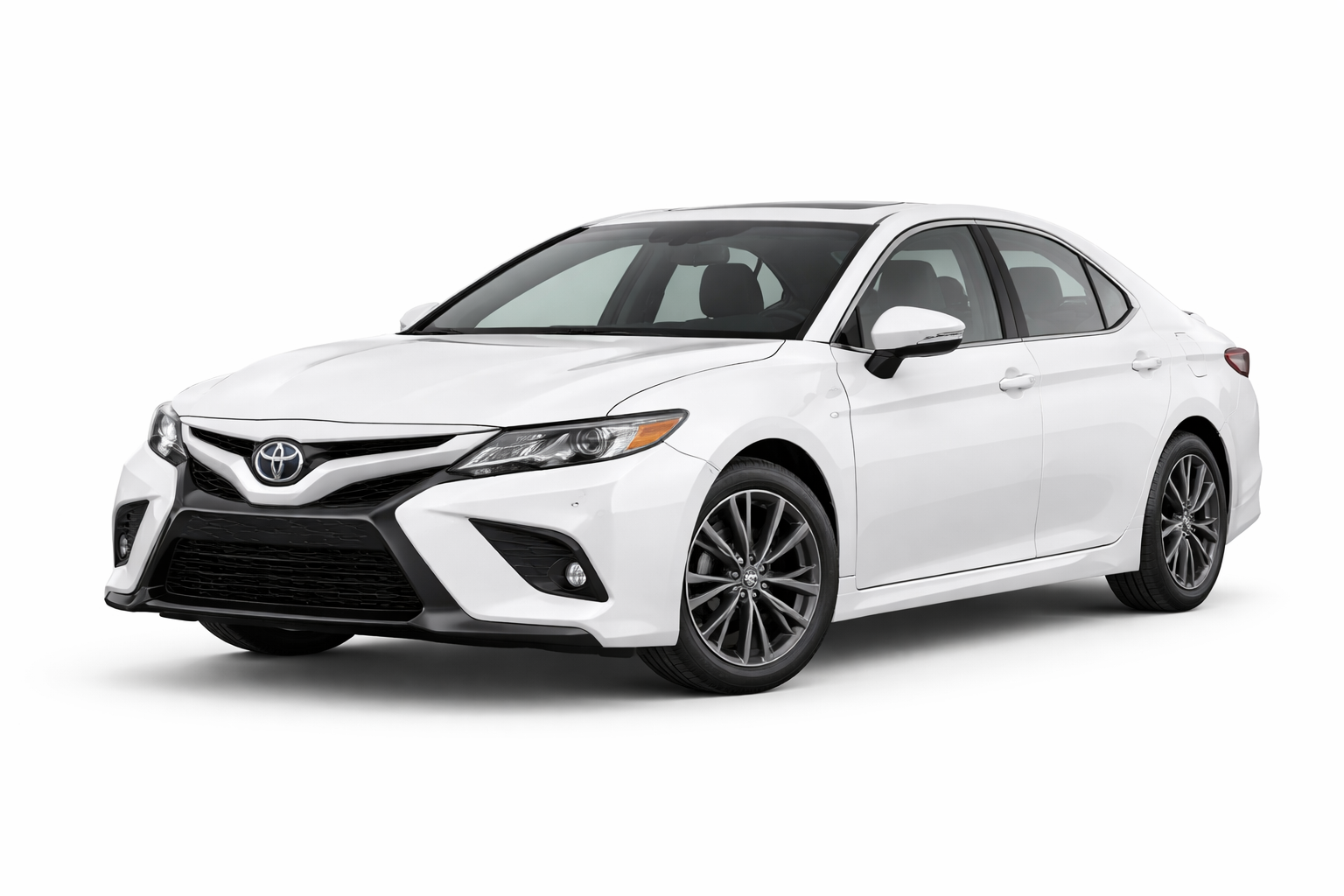
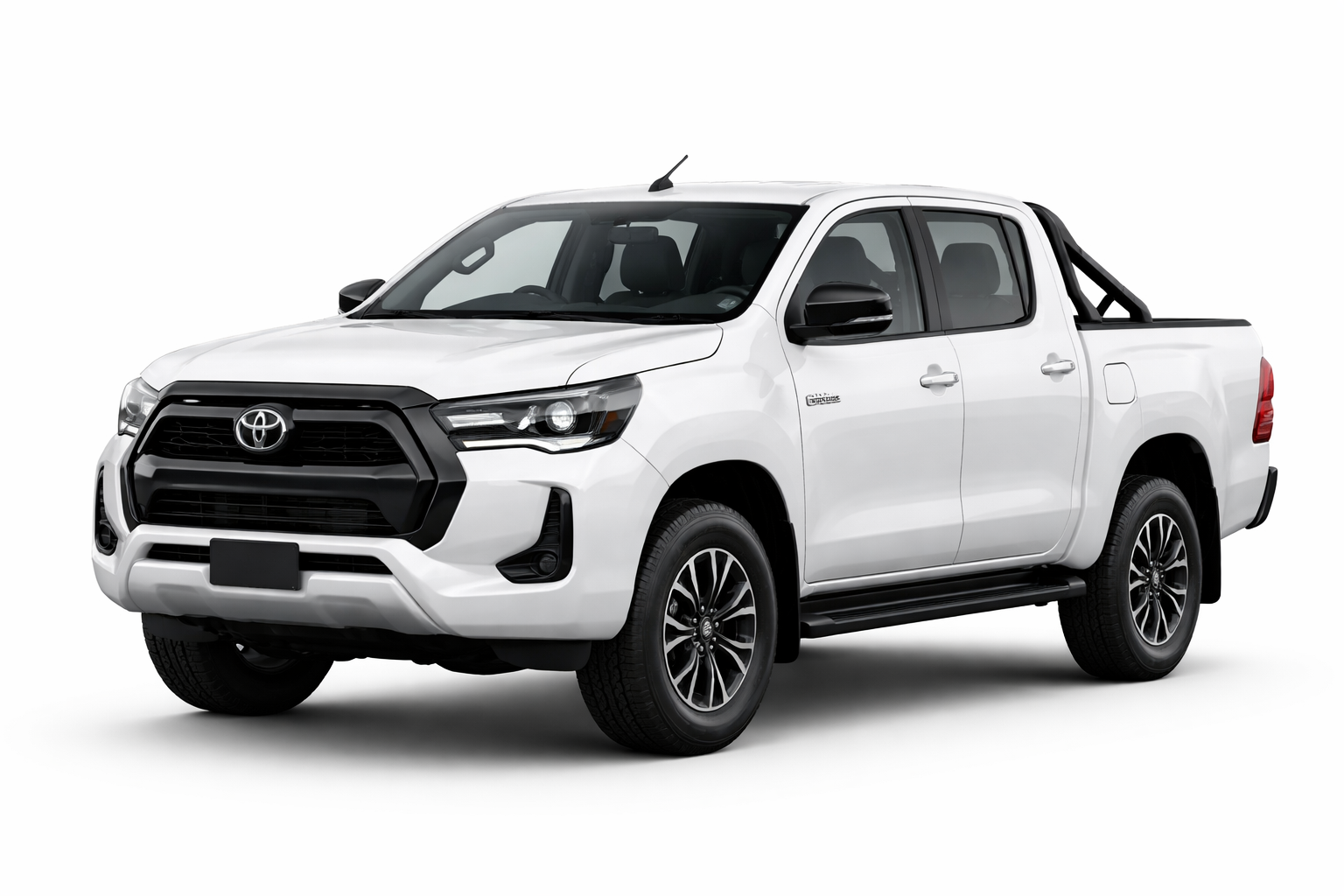

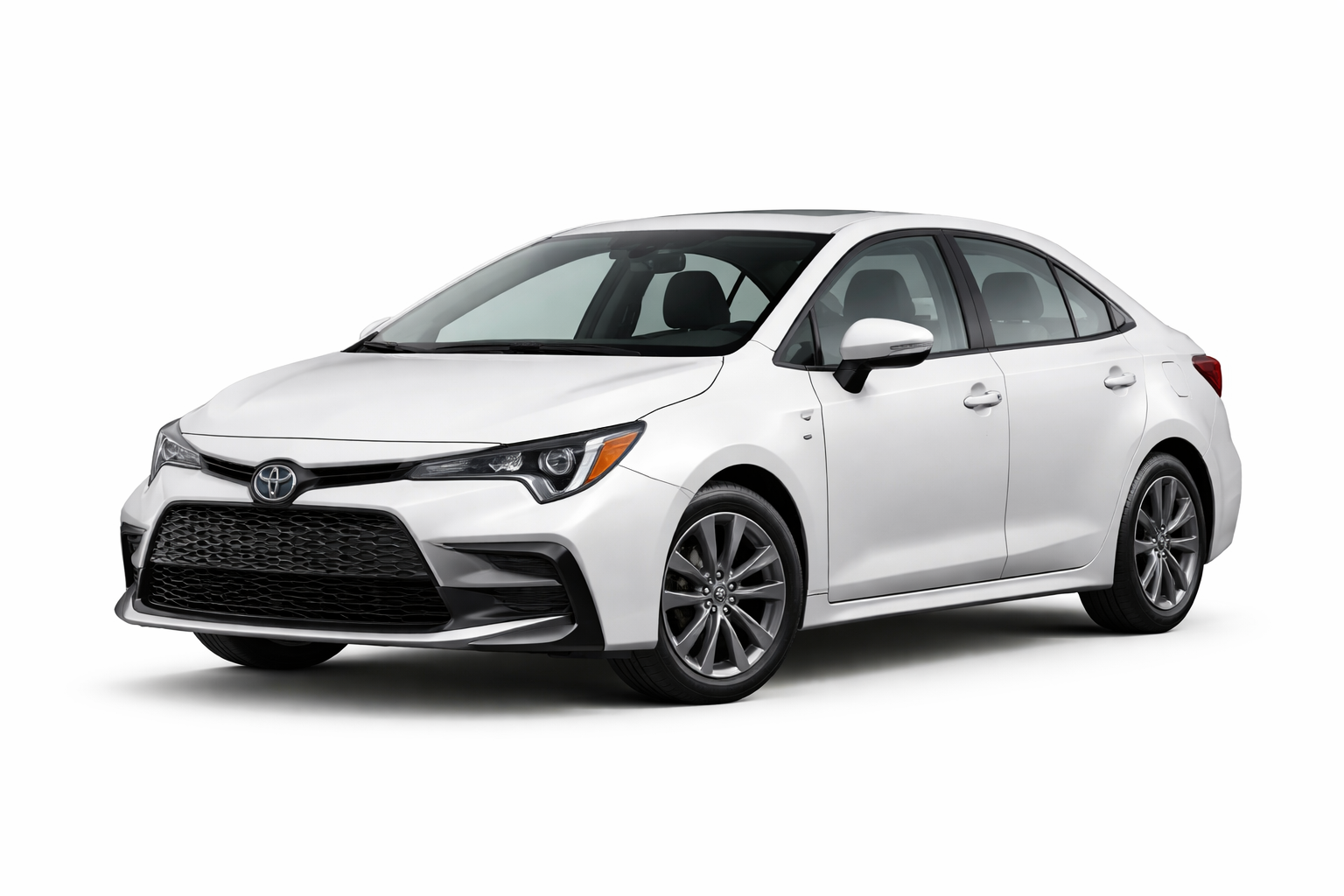

Catching automatic gearbox problems early is the single most effective way to avoid a catastrophic repair bill on your Toyota. I have spent considerable time reviewing international workshop data, owner forums, and automotive engineering resources, and the pattern is unambiguous: most Toyota transmission failures that cost R45,000 or more to repair started as minor symptoms that were ignored for months. A R500 diagnostic scan or a five-minute fluid check on your Hilux, Fortuner, Corolla, or Camry can reveal problems when they are still R2,000-R5,000 fixes rather than full gearbox replacements. In this guide, I will walk you through every warning sign, the diagnostic methods available in South Africa, and exactly what each repair costs in ZAR.
Key Takeaways
| Topic | Key Finding | Detail |
|---|---|---|
| Common Signs | Seven warning symptoms point to gearbox trouble | Delayed engagement and rough shifting are the earliest and most reliable indicators |
| Toyota Weak Points | Each Toyota model has specific vulnerabilities | Hilux and Fortuner suffer valve body issues; Corolla CVTs overheat under load |
| Diagnostic Methods | Three approaches from DIY to professional | Visual checks, OBD2 scanning, and pressure testing cover all failure types |
| Fluid Check | Fluid colour tells you 80% of the story | Bright red is healthy; brown or black means immediate attention |
| Scan Costs | Professional diagnosis costs R500-R2,500 in SA | This is a fraction of the cost of misdiagnosing the problem |
| Repair vs Replace | Repair saves R15,000-R40,000 over replacement | Valve body rebuild vs full gearbox replacement is the critical decision |
| Extend Lifespan | Six proven habits prevent premature failure | Fluid changes at 60,000 km and an auxiliary cooler are the two biggest wins |
Common Signs of Automatic Gearbox Problems
Knowing what to look for is half the battle. According to HowStuffWorks and multiple international transmission specialists, these are the seven symptoms that indicate your Toyota’s automatic gearbox needs attention.
| Symptom | What You Experience | Likely Cause | Urgency |
|---|---|---|---|
| Delayed engagement | 2-3 second pause when shifting into Drive or Reverse | Low fluid, worn clutch packs, or failing solenoids | High |
| Rough or harsh shifting | Jerking or banging when gears change | Degraded ATF, faulty shift solenoids, or worn bands | High |
| Gear slipping | Engine revs climb but vehicle speed does not increase | Worn clutch packs, low fluid pressure, or torque converter failure | Critical |
| Transmission fluid leak | Red or brown puddles under the vehicle | Damaged pan gasket, cracked lines, or worn seals | High |
| Burning smell | Acrid, burnt-toast odour from under the bonnet | Overheated or severely oxidised transmission fluid | Critical |
| Whining or humming noise | Continuous noise that changes with vehicle speed | Low fluid, worn bearings, or damaged planetary gears | Moderate |
| Check engine or transmission warning light | Dashboard warning illumination | Sensor fault, solenoid failure, or internal mechanical issue | Moderate to High |
Warning: Do Not Ignore Gear Slipping
Gear slipping means your transmission cannot maintain hydraulic pressure in the clutch packs. According to SlashGear, continued driving with a slipping transmission causes heat buildup that destroys internal components exponentially. What might be a R3,500 solenoid replacement today becomes a R45,000 gearbox replacement next month.
How Symptoms Progress
Transmission failures rarely happen overnight. The typical progression runs like this:
- Early stage — Slightly delayed shifts when cold, occasional rough engagement. Fluid may be turning from red to dark red.
- Mid stage — Consistent harsh shifting, intermittent slipping under load, burnt smell from fluid. Warning lights may trigger.
- Late stage — Complete gear slipping, vehicle will not engage Drive or Reverse, metallic debris visible in fluid.
The earlier you catch the problem, the cheaper the fix. I cannot stress this enough.
Toyota Models and Their Transmission Weak Points
Not all Toyota transmissions fail the same way. Based on data from CarsGuide Australia and ASR Gearbox Repairs UK, here are the model-specific issues I have identified.
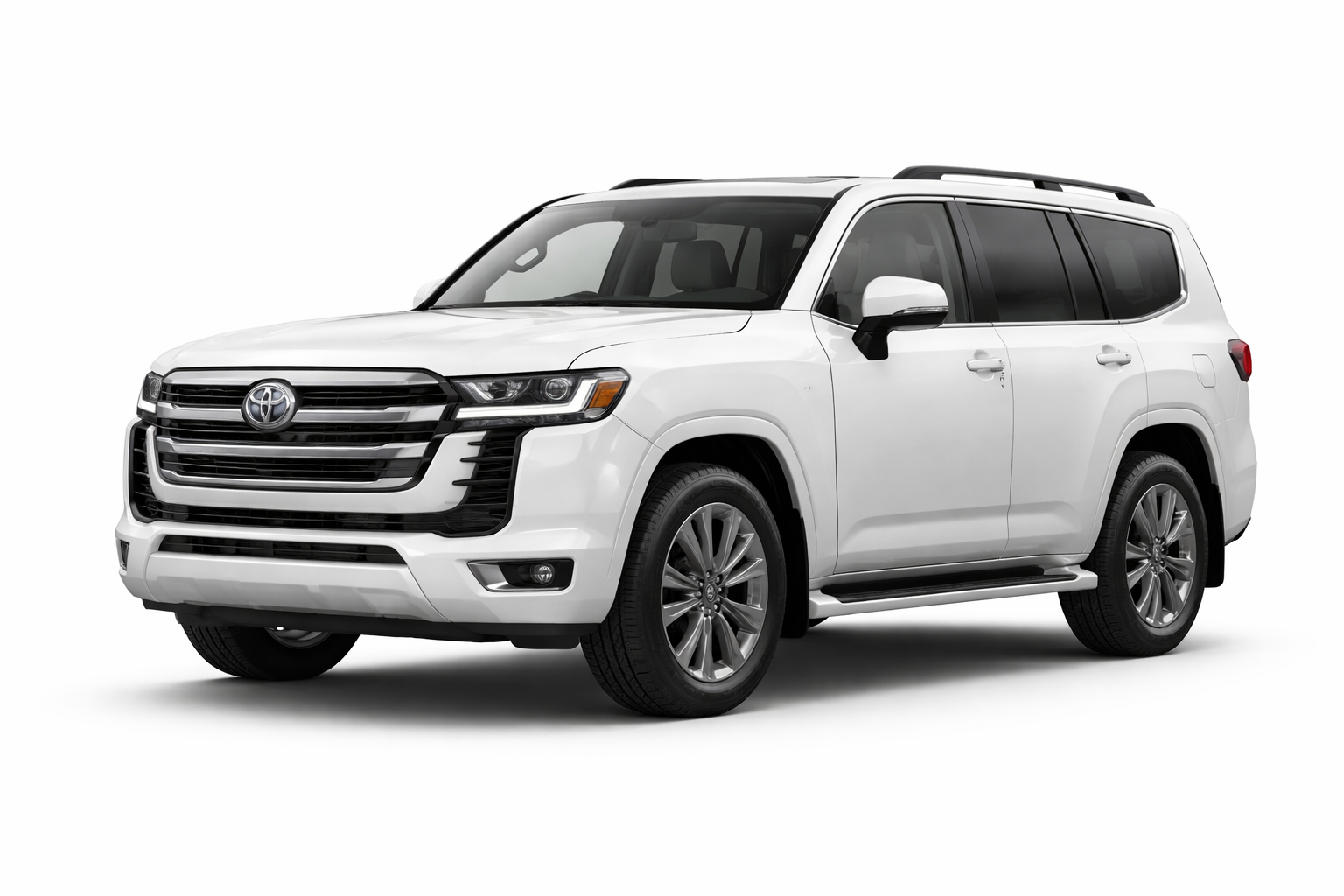
Toyota Hilux (6-Speed Auto — A750/A760 Series)
The Hilux automatic uses a conventional torque converter transmission that is generally robust, but specific weak points emerge under South African driving conditions.
- Valve body wear — The most common issue on high-mileage Hilux automatics. Worn valve body bores cause delayed and erratic shifting, particularly noticeable at the 35 km/h and 80 km/h shift points.
- Torque converter shudder — Develops between 40-60 km/h as the lock-up clutch wears. Often mistaken for engine misfire.
- Reverse gear delay — The GD-6 automatic shows a pattern of delayed reverse engagement, typically caused by a failing reverse gear switch or worn transmission range sensor.
If you need replacement parts, browse our Hilux gearbox parts catalogue for tested components.
South African Context
The Hilux is the best-selling vehicle in South Africa, and the automatic variant accounts for an increasing percentage of sales. Many of these vehicles do heavy-duty work — farm use, construction site commutes, and towing — which accelerates gearbox wear significantly beyond normal passenger car use.
Toyota Fortuner (6-Speed Auto — Shared Platform with Hilux)
The Fortuner shares its transmission architecture with the Hilux but is subjected to different stress patterns as a family SUV.
- Shift shock — Commonly reported during downshifts when slowing from highway speed, particularly in Sport mode. The transmission downshifts aggressively, producing a noticeable jolt.
- Delayed gear engagement on cold start — Low or degraded ATF affects hydraulic pressure before the fluid warms up, causing a 2-3 second pause when first selecting Drive.
- Oil contamination issues — Coolant-to-transmission cross-contamination from a failing internal radiator cooler is a known problem that requires immediate attention.
Check our Fortuner gearbox parts page for available transmission components.
Toyota Corolla (CVT — Direct Shift CVT)
The Corolla uses Toyota’s continuously variable transmission (CVT), which has different failure patterns than conventional automatics.
- CVT belt wear — Under heavy load or aggressive driving, the steel belt can wear prematurely, causing a loss of drive and shuddering.
- Overheating — CVTs are particularly sensitive to heat. Prolonged stop-start driving in South African summer temperatures degrades the CVTF faster than conventional ATF.
- Juddering at low speed — A common early symptom indicating the CVT fluid has lost viscosity and needs replacement.
Toyota Camry (8-Speed Auto or eCVT Hybrid)
The Camry is generally one of the more reliable Toyota transmissions, but issues still arise.
- 8-speed auto — Occasional harsh 1-2 shift when cold, typically resolved with a software update or ATF service.
- eCVT hybrid — Extremely reliable with very few mechanical failures. Problems, when they occur, tend to be electronic rather than mechanical.
Three Methods of Gearbox Diagnostics
When you suspect a transmission problem, there are three escalating levels of diagnosis. I recommend starting with the simplest and cheapest method before moving to professional diagnosis.
Method 1: Visual and Sensory Inspection (DIY — Free)
You can perform this yourself in your driveway in under 15 minutes. According to How a Car Works, these checks catch the majority of developing problems.
What to check:
- Fluid level — With the engine running and warmed up, check the transmission dipstick (if fitted). Low fluid is the number one cause of shifting problems.
- Fluid colour — Pull the dipstick and wipe it on a white cloth. Compare the colour against the chart in the section below.
- Fluid smell — Fresh ATF smells faintly sweet. Burnt ATF has a sharp, acrid smell that is unmistakable.
- Under-vehicle leaks — Look for red or brown fluid spots where you park. Transmission fluid leaks are easy to distinguish from engine oil.
- Drive test — Pay attention to shift quality when cold versus warm. Note any delays, jerks, slips, or unusual noises.
Tip: The White Paper Test
Drop a small amount of transmission fluid onto a white paper towel. Healthy fluid will be translucent red or light amber. If the fluid is dark brown, opaque, or has visible particles, your transmission needs immediate professional attention.
Method 2: OBD2 Diagnostic Scan (DIY or Workshop — R500-R1,500)
A diagnostic scan tool reads trouble codes stored by the Transmission Control Module (TCM). According to MOTOR Magazine, scan tools are the most valuable diagnostic tool for transmission issues, particularly electronic faults.
What it reveals:
- Solenoid fault codes (P0750-P0770 range)
- Transmission fluid temperature codes
- Torque converter clutch codes (P0740-P0744)
- Gear ratio error codes
- Shift timing irregularities
What it misses:
- Mechanical wear that has not triggered a code
- Early-stage clutch pack deterioration
- Valve body bore wear
- Bearing degradation
A basic Bluetooth OBD2 scanner costs around R1,500-R3,000 for home use. Professional-grade scanners with transmission-specific capabilities start at around R8,000.
Method 3: Pressure Testing and Professional Diagnosis (Workshop — R1,500-R2,500)
This is the gold standard. A transmission specialist connects a pressure gauge to the transmission’s test ports and measures hydraulic pressure across all gears under load. This method catches every failure type, including mechanical issues that OBD2 scans miss.
What it reveals:
- Exact clutch pack condition
- Pump output pressure
- Line pressure across all gears
- Governor or solenoid pressure accuracy
- Torque converter internal pressure
When to Go Straight to Method 3
If your transmission is slipping, making grinding noises, or refusing to engage a gear, skip Methods 1 and 2 and go directly to professional pressure testing. These symptoms indicate internal mechanical failure that an OBD2 scan will not fully diagnose.
Transmission Fluid — The First Thing to Check
Your automatic transmission fluid is both lubricant and hydraulic medium. According to Universal Technical Institute, the colour and smell of your ATF reveals roughly 80% of developing problems before any other symptom appears.
Transmission Fluid Colour Chart
| Fluid Colour | Condition | Action Required |
|---|---|---|
| Bright red, translucent | New or near-new fluid | No action needed |
| Dark red | Normal ageing, fluid still effective | Monitor and plan for next service |
| Light brown | Oxidation beginning, additives degrading | Schedule a fluid change within 5,000 km |
| Dark brown | Significant oxidation, poor lubrication | Change fluid immediately; inspect for internal damage |
| Black, opaque | Severely burnt, transmission at risk | Professional inspection required immediately |
| Pink or milky | Water or coolant contamination | Critical — do not drive; tow to workshop |
Warning: Milky Pink Fluid Is an Emergency
If your ATF appears pink, milky, or foamy, coolant has entered the transmission. This typically happens through a cracked internal radiator cooler. Do not drive the vehicle. Coolant contamination destroys clutch packs and seals within days. Tow it to a transmission specialist immediately.
Toyota-Specific Fluid Requirements
Toyota automatics require specific ATF types:
- Hilux and Fortuner 6-speed — Toyota ATF-WS (World Standard)
- Corolla CVT — Toyota CVTF-FE
- Camry 8-speed — Toyota ATF-WS
Using incorrect fluid, even a “universal” ATF, can cause shift quality issues and accelerate internal wear. I always recommend genuine Toyota fluid or an exact equivalent that meets Toyota’s WS specification.
Diagnostic Scan Costs in South Africa
Here is what you can expect to pay for transmission diagnostics at South African workshops, based on my research across multiple service providers.
| Service Level | What It Includes | Typical Cost (ZAR) |
|---|---|---|
| Basic OBD2 code read | Read and clear transmission fault codes | R500 - R800 |
| Comprehensive diagnostic scan | Full TCM scan, live data, and interpretation | R800 - R1,500 |
| Pressure test and diagnosis | Hydraulic pressure testing across all gears | R1,500 - R2,500 |
| Full transmission inspection | Includes pan drop, filter check, and fluid analysis | R2,000 - R3,500 |
| Specialist rebuild assessment | Complete teardown inspection and rebuild quote | R3,000 - R5,000 (credited toward repair) |
Cost-Saving Tip
Many transmission specialists in South Africa will credit the diagnostic fee toward the repair if you proceed with them. A R2,500 diagnosis that catches a valve body issue early can save you R30,000 or more compared to discovering the problem after the gearbox has failed completely.
Repair vs Replace — Cost Comparison
This is the critical decision point. Once diagnosed, you need to weigh repair against replacement. Here is a realistic cost comparison in ZAR for common Toyota models, sourced from international pricing data adjusted for the South African market.
| Repair Type | Hilux/Fortuner (ZAR) | Corolla CVT (ZAR) | Camry (ZAR) |
|---|---|---|---|
| Fluid change and filter service | R1,500 - R3,500 | R1,200 - R2,800 | R1,500 - R3,000 |
| Solenoid pack replacement | R3,500 - R7,000 | R3,000 - R6,000 | R3,000 - R6,500 |
| Valve body rebuild | R8,000 - R15,000 | R7,000 - R12,000 | R7,500 - R13,000 |
| Torque converter replacement | R8,000 - R18,000 | N/A (CVT) | R8,000 - R16,000 |
| Full gearbox rebuild | R25,000 - R45,000 | R20,000 - R38,000 | R22,000 - R40,000 |
| Complete gearbox replacement (new) | R55,000 - R85,000 | R45,000 - R70,000 | R50,000 - R75,000 |
| Used gearbox (tested, with warranty) | R15,000 - R35,000 | R12,000 - R28,000 | R14,000 - R30,000 |
The Numbers Are Clear
A valve body rebuild on a Hilux costs R8,000-R15,000. A full gearbox replacement costs R55,000-R85,000. Early diagnosis through a R2,500 inspection can identify whether the valve body is the problem before internal damage spreads to the clutch packs and planetary gears. That is a potential saving of R40,000-R70,000.
When to Repair
- Transmission has fewer than 200,000 km
- Damage is isolated to one component (solenoid, valve body, or torque converter)
- Fluid analysis shows minimal metallic contamination
- Vehicle is otherwise in good condition
When to Replace
- Multiple internal components have failed
- Fluid contains heavy metallic particles or sludge
- Transmission has over 250,000 km and shows widespread wear
- Rebuild cost exceeds 60% of replacement cost
A quality used transmission from a reputable parts supplier is often the best middle ground. Browse our Hilux gearbox parts and Fortuner gearbox parts catalogues for tested units with warranty.
How to Extend Your Gearbox Lifespan
Prevention is dramatically cheaper than cure. Based on the international maintenance data I have reviewed, these six habits will maximise the lifespan of your Toyota automatic gearbox.
1. Change ATF at 60,000 km Intervals
Toyota officially recommends ATF changes at 80,000-100,000 km under normal conditions. However, South African conditions — heat, dust, stop-start traffic, and towing — are not normal conditions. I recommend a fluid and filter change every 60,000 km, or every 40,000 km if you tow regularly or drive primarily in city traffic.
Tip: Do Not Flush — Drain and Fill
A pressurised transmission flush can dislodge debris and push it into the valve body, causing more harm than good. Instead, opt for a drain-and-fill method where old fluid is drained, the filter is replaced, and fresh ATF is added. This removes approximately 40-50% of the old fluid per service, which is gentler on high-mileage transmissions.
2. Fit an Auxiliary Transmission Cooler
If you tow anything — trailers, caravans, boats — an aftermarket transmission oil cooler is one of the best investments you can make. Heat is the number one killer of automatic transmissions. According to ASR Gearbox Repairs, every 10 degrees Celsius above the normal operating temperature of 80 degrees halves the life of your ATF. An auxiliary cooler costs R2,000-R5,000 fitted and can double your gearbox lifespan.
3. Allow Warm-Up Time
When starting your Toyota on a cold morning, wait 30-60 seconds before selecting Drive. This allows the ATF to circulate through the valve body and clutch packs. Engaging Drive immediately on a cold start forces dry clutch packs to engage under full load, accelerating wear.
4. Come to a Complete Stop Before Shifting
Shifting from Drive to Reverse (or vice versa) while the vehicle is still rolling — even at 2-3 km/h — places enormous shock loads on the transmission internals. The parking pawl, output shaft, and clutch packs absorb forces they were not designed for. Always come to a complete stop before changing direction.
5. Do Not Ride the Brakes Downhill
When descending long hills, use the transmission’s lower gear range (L, 2, or manual mode) rather than riding the brakes. This uses engine braking to control speed, reducing heat buildup in both the brakes and the transmission. The Fortuner and Hilux both offer manual gear selection for exactly this purpose.
6. Service the Cooling System
Your transmission cooler runs through the radiator. If the radiator is not functioning properly — blocked fins, low coolant, or a failing thermostat — the transmission fluid will not cool adequately. Include the radiator and coolant system in every major service to protect the gearbox indirectly.
Maintenance Cost Summary
Following these six habits costs approximately R3,500-R6,000 per year in additional maintenance. A single gearbox rebuild costs R25,000-R45,000. The maths is straightforward.
Final Thoughts
Your Toyota automatic gearbox is engineered to last 250,000 km or more with proper care. The critical factor is catching problems early. A delayed shift, a slightly burnt smell, or a darker-than-usual fluid colour are not things to “keep an eye on” — they are signals to act on immediately.
If your Hilux, Fortuner, Corolla, or Camry is showing any of the symptoms I have outlined in this guide, start with a fluid check. If the fluid looks questionable, book a diagnostic scan. And if the scan reveals fault codes, get a professional pressure test before the problem escalates.
For quality tested Hilux gearbox parts and Fortuner gearbox parts, browse our catalogue or contact us directly. Every transmission component we supply is tested and comes with a warranty — because replacing a gearbox part should fix the problem, not create a new one.